241 posters, 10 topics, 7 sessions, 899 authors, 296 institutions
ePostersLive by SciGen Technologies S.A. All rights reserved.
The AAPS 103rd Annual Meeting 2025
May 24-27, 2025 | Austin, Texas

D54
Impact Of Socioeconomic Deprivation On Timing And Long-term Outcomes Of Cleft Repair Surgery: A 30-year Retrospective Analysis
Poster Presenter
Part of Topic
Craniofacial/Peds
The Impact of Socioeconomic Deprivation on Timing and Long-term Outcomes of Cleft Surgery: A 30-Year Retrospective Analysis
-
Delayed cleft surgery can affect nutrition, social integration, and speech.
-
While sociodemographic factors in cleft care are well-characterized, the impact of neighborhood-level socioeconomic deprivation on surgery timing and outcomes like palatal fistula and velopharyngeal insufficiency (VPI) is less explored.
-
Retrospective review children undergoing cleft lip and palate repair by a single tertiary children’s hospital from 1995 to 2024
-
Data collected include:
-
Demographics
-
Age at surgery (CL, CP, VPI)
-
Postoperative palatal fistula, time to repair from diagnosis
-
Distance from hospital (km)
-
Area of Deprivations Index (ADI) State Specific Percentile (Scale is from 1-10
-
Insurance status
-
Patients stratified by ADI Deprivation Cohorts:
-
Low: ADI 1-3, Medium: ADI 4-6, High: ADI 7-10
-
Inclusion Criteria: Patients with both cleft lip and palate
-
Exclusion Criteria: Syndromic patients, repair at OH
-
Delays were defined as cleft lip repair after 6 months and palatoplasty after 12 months.
-
Statistical Analysis
-
Chi-square test for categorical variables
-
Wilcoxon rank-sum test for continuous variables
-
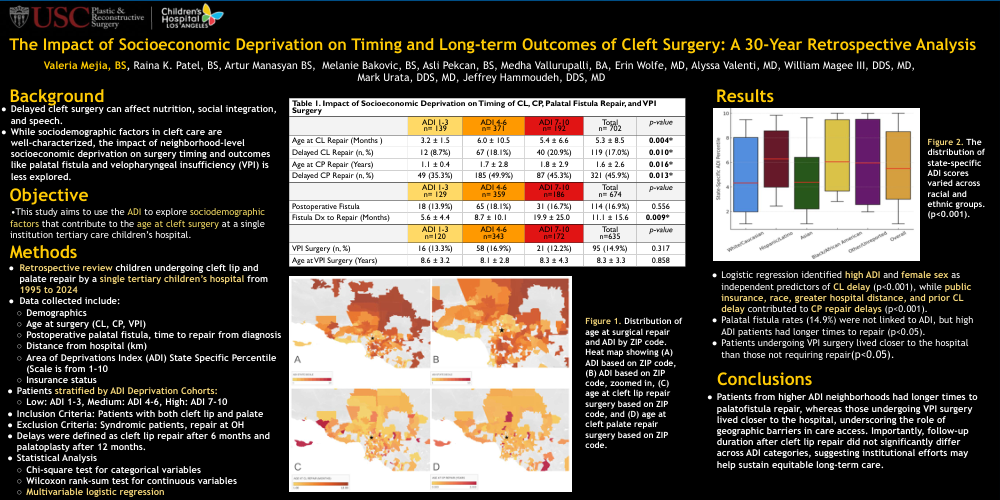
Logistic regression identified high ADIand female sex as independent predictors of CL delay(p<0.001), while public insurance, race, greater hospital distance, and prior CL delay contributed to CP repair delays (p<0.001).
-
Palatal fistula rates (14.9%) were not linked to ADI, but high
-
ADI patients had longer times to repair (p<0.05).
-
Patients undergoing VPI surgery lived closer to the hospital than those not requiring repair(p<0.05).
Conclusions:
-
Patients from higher ADI neighborhoods had longer times to palatofistula repair, whereas those undergoing VPI surgery lived closer to the hospital, underscoring the role of geographic barriers in care access. Importantly, follow-up duration after cleft lip repair did not significantly differ across ADI categories, suggesting institutional efforts may help sustain equitable long-term care.