4,068 posters, 219 videos, 101 topics, 69 sessions, 14,365 authors, 6,128 institutions
ePostersLive by SciGen Technologies S.A. All rights reserved.
Alzheimer's Association International Conference 2026
July 12-15, 2026 | London, United Kingdom, and Online

12903
Tampere Sudden Death Study Alzheimer’s Disease Pathology Findings
Part of Topic
Basic Science and Pathogenesis -> Human Neuropathology -> Proteinopathies
Title
Tampere Sudden Death Study Alzheimer’s disease pathology findings
Authors
Eloise H Kok, Benjamin Englert, Pekka J Karhunen, Liisa Myllykangas
Key Takeaway
Amyloid beta and phosphorylated tau immunohistochemical reactivity is present in human brain tissue decades before dementia symptoms might appear
Background
Understanding the pathology associated with dementia outside of dementia populations will assist in elucidating the impact of these brain changes on disease progression. It will also allow us to understand the prevalence of these markers in the general population.
Methods
The Tampere Sudden Death Study is a forensic autopsy cohort of individuals that died outside of hospital suddenly from 2009 – 2015 in the Tampere region of south western Finland, encompassing a total of 700 individuals ranging in age from 16 to 97 years old. Immunohistochemical staining of brain regions assessing amyloid beta and phosphorylated tau protein pathology were performed, scored according to a modified ABC scoring system, and analysed for association with age and gender.
Results
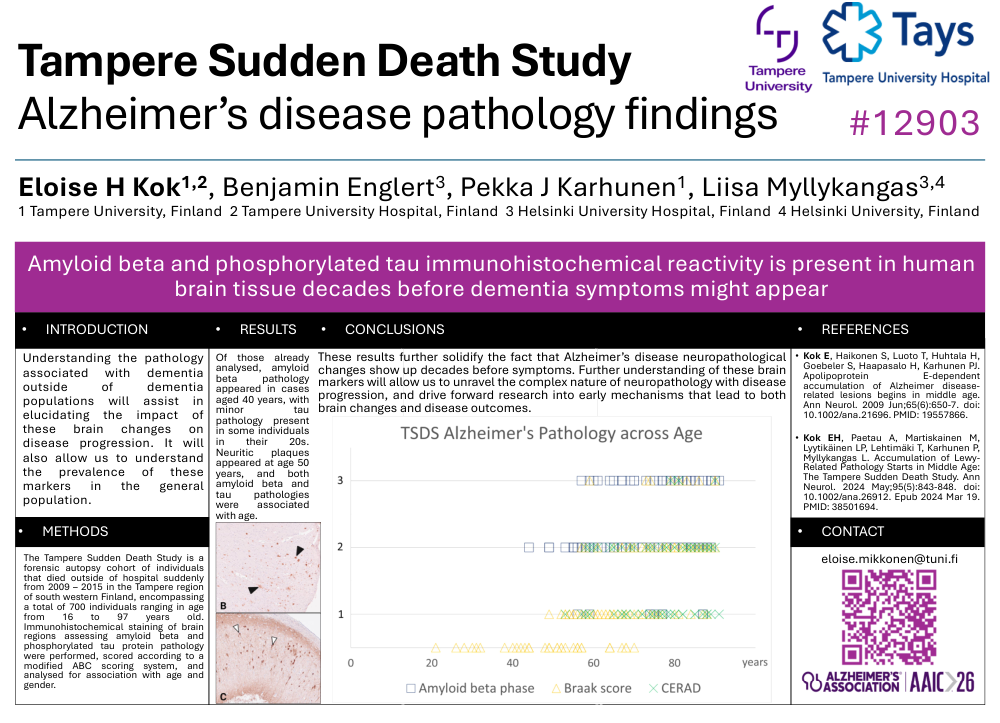
Of those already analysed, amyloid beta pathology appeared in cases aged 40 years, with minor tau pathology present in some individuals in their 20s. Neuritic plaques appeared at age 50 years, and both amyloid beta and tau pathologies were associated with age.
Conclusions
These results further solidify the fact that Alzheimer’s disease neuropathological changes show up decades before symptoms. Further understanding of these brain markers will allow us to unravel the complex nature of neuropathology with disease progression, and drive forward research into early mechanisms that lead to both brain changes and disease outcomes.
References
Comments
Email is required but is not shown publicly.
Loading comments...