4,068 posters, 219 videos, 101 topics, 69 sessions, 14,365 authors, 6,128 institutions
ePostersLive by SciGen Technologies S.A. All rights reserved.
Alzheimer's Association International Conference 2026
July 12-15, 2026 | London, United Kingdom, and Online

13818
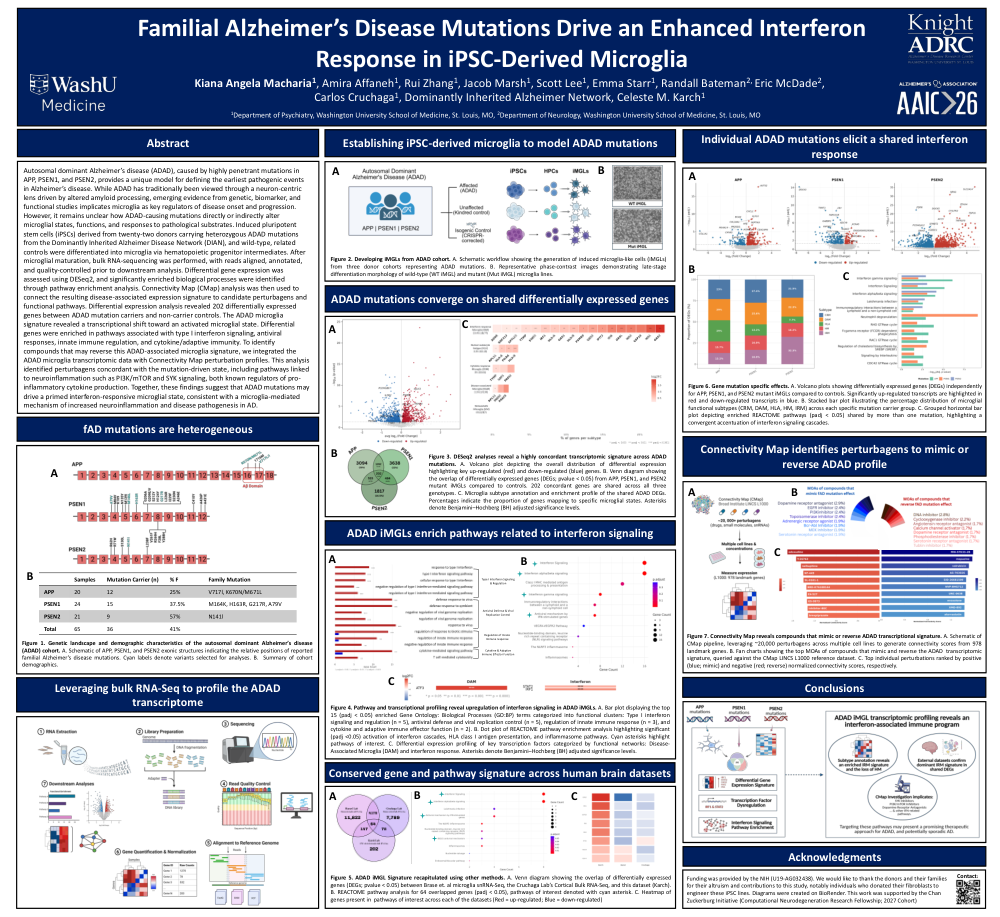
Familial Alzheimer’s Disease Mutations Drive An Enhanced Interferon Response In Ipsc-derived Microglia
Poster Presenter
Authors
Part of Topic
Basic Science and Pathogenesis -> Genetics -> Transcriptomics
Autosomal dominant Alzheimer’s disease (ADAD), caused by highly penetrant mutations in APP, PSEN1, and PSEN2, provides a unique model for defining the earliest pathogenic events in Alzheimer’s disease. While ADAD has traditionally been viewed through a neuron-centric lens driven by altered amyloid processing, emerging evidence from genetic, biomarker, and functional studies implicates microglia as key regulators of disease onset and progression. However, it remains unclear how ADAD-causing mutations directly or indirectly alter microglial states, functions, and responses to pathological substrates. Induced pluripotent stem cells (iPSCs) derived from twenty-two donors carrying heterozygous ADAD mutations from the Dominantly Inherited Alzheimer Disease Network (DIAN), and wild-type, related controls were differentiated into microglia via hematopoietic progenitor intermediates. After microglial maturation, bulk RNA-sequencing was performed, with reads aligned, annotated, and quality-controlled prior to downstream analysis. Differential gene expression was assessed using DESeq2, and significantly enriched biological processes were identified through pathway enrichment analysis. Connectivity Map (CMap) analysis was then used to connect the resulting disease-associated expression signature to candidate perturbagens and functional pathways. Differential expression analysis revealed 202 differentially expressed genes between ADAD mutation carriers and non-carrier controls. The ADAD microglia signature revealed a transcriptional shift toward an activated microglial state. Differential genes were enriched in pathways associated with type I interferon signaling, antiviral responses, innate immune regulation, and cytokine/adaptive immunity. To identify compounds that may reverse this ADAD-associated microglia signature, we integrated the ADAD microglia transcriptomic data with Connectivity Map perturbation profiles. This analysis identified perturbagens concordant with the mutation-driven state, including pathways linked to neuroinflammation such as PI3K/mTOR and SYK signaling, both known regulators of pro-inflammatory cytokine production. Together, these findings suggest that ADAD mutations may drive a primed interferon-responsive microglial state, consistent with a microglia-mediated mechanism of increased neuroinflammation and disease pathogenesis in AD.
Comments
Email is required but is not shown publicly.
Loading comments...