4,068 posters, 219 videos, 101 topics, 69 sessions, 14,365 authors, 6,128 institutions
ePostersLive by SciGen Technologies S.A. All rights reserved.
Alzheimer's Association International Conference 2026
July 12-15, 2026 | London, United Kingdom, and Online

12926
Amyloid-beta Oligomers Cause Hippocampal Circuit Dysfunction In Alzheimer's Disease
Poster Presenter
Authors
Affiliations
Part of Topic
Basic Science and Pathogenesis -> Molecular and Cell Biology -> APP/Abeta/Amyloid
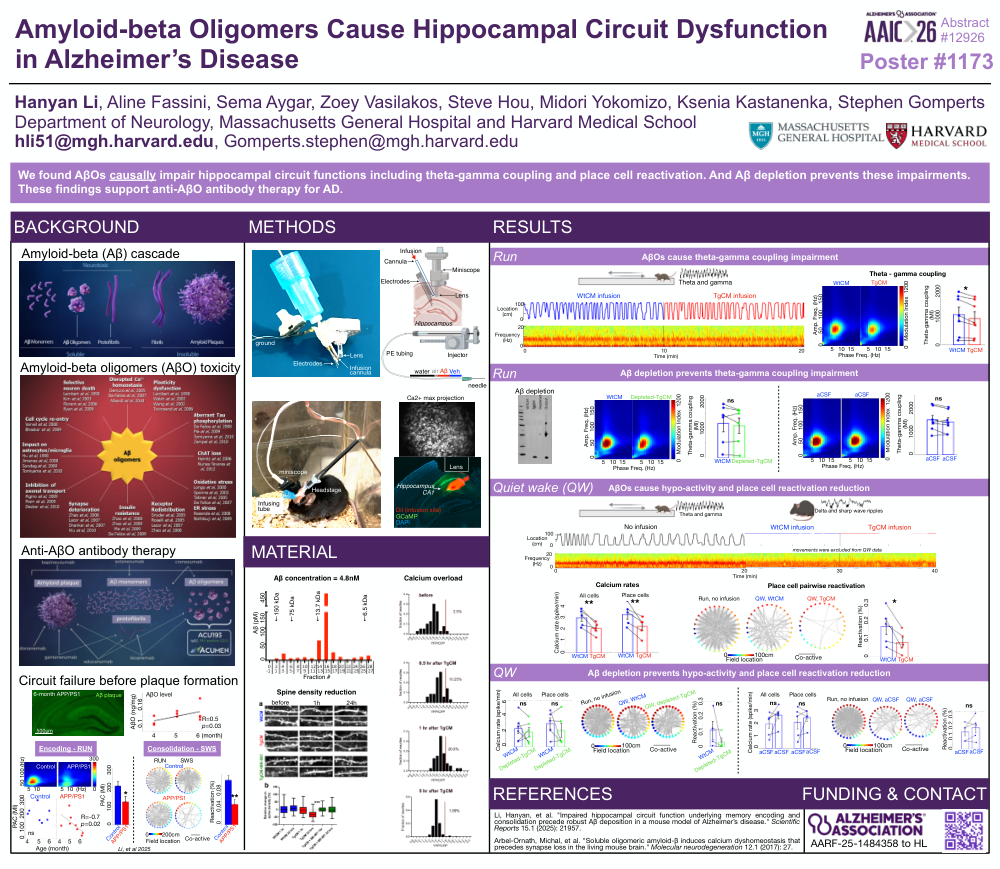
Although Amyloid-beta (Aβ) plaques are the hallmarks of Alzheimer’s Disease (AD), their level correlates poorly with dementia severity and their clearance only modestly slows cognitive decline in AD patients. In contrast, the level of soluble Aβ species correlates with AD progression, and the toxicity of Aβ oligomers (AβO) at the cellular level is well-established. However, the impact of AβO on circuit level functions remains unclear. Here we conducted a causal study by recording simultaneous dynamic calcium imaging and electrophysiology in freely behaving wild-type mice during hippocampal infusion of naturally occurring AβO. During active wakefulness when memory is encoded, theta-gamma coupling was impaired with the infusion of transgenic culture media (TgCM) compared with the infusion of wild-type culture media (WtCM). Depletion of Aβ abolished this effect. During quiet wakefulness when place cell sequences are replayed, place cell reactivation was reduced with the infusion of TgCM compared with WtCM infusion. Once again, depletion of Aβ prevented this effect. Together, our results demonstrate that AβO causally disrupts systems-level neural circuit functions that are critical to memory. These results provide a useful lens through which to consider the modest effectiveness of current plaque-clearing treatments and support the therapeutic potential of efforts targeting AβO.
Comments
Email is required but is not shown publicly.
Loading comments...