516 posters, 59 topics, 63 sessions, 1,127 authors, 353 institutions
ePostersLive by SciGen Technologies S.A. All rights reserved.
2026 SOAP Annual Meeting
April 29 - May 3, 2026 | Montreal, Quebec Canada

2341753
Suspected Intravenous Carboprost Administration Mimicking Anaphylaxis and Severe Preeclampsia During Cesarean Delivery: A Case Report
Poster Presenter
Authors
Part of Topic
Triple A: Airway, Angioedema, Anaphylaxis
Suspected Intravenous Carboprost Administration Mimicking Anaphylaxis and Severe Preeclampsia During Cesarean Delivery: A Case Report
Authors: Jacelyn Emily Peabody Lever MD, PhD1; Xiao Linda Zhang DO, PhD1; Annalese Neuenschwander MD1
1Department of Anesthesiology, The University of Alabama at Birmingham, Birmingham, AL
Character Count: 2889/3000
Figure Count: 1/1
Introduction:
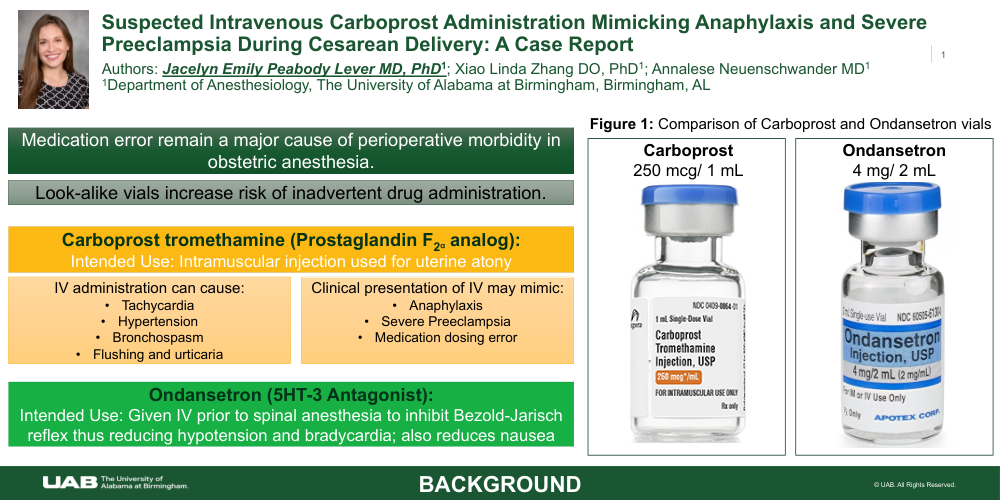
Medication errors remain a significant cause of perioperative morbidity in obstetric anesthesia. Carboprost tromethamine, a prostaglandin F2α analog, is associated with tachycardia, hypertension, bronchospasm, flushing, and urticaria when administered intravenously. Confusion between similarly appearing medication vials may increase the risk of inadvertent administration. We report a case of acute maternal hemodynamic instability during cesarean delivery in which inadvertent intravenous carboprost administration was suspected.
Case Description:
A 30-year-old P0000 at 40.1 weeks with PMH autosomal dominant tubulointerstitial kidney disease and preeclampsia without severe features underwent urgent primary low transverse cesarean delivery for arrest of descent after prolonged second stage. A poorly functioning labor epidural was removed, and patient sat for a combined spinal–epidural, which was placed uneventfully. The patient had previously tolerated epidural bupivacaine and fentanyl without complication.
Intrathecal medications included reduced-dose isobaric bupivacaine (5 mg), fentanyl (15 mcg), and morphine (100 mcg) and the patient received ondansetron IV (4 mg). Shortly after supine positioning with left lateral tilt, the patient developed acute tachycardia to the 150s, severe hypertension (SBP >170 mmHg), dyspnea, chest and facial urticaria, and fetal bradycardia. Cefazolin and phenylephrine infusion were discontinued. Oxygen saturation remained normal. Due to concurrent hypertension and tachycardia, epinephrine was withheld. Management included diphenhydramine, esmolol, corticosteroids after delivery, and supplemental oxygen. Stat cesarean delivery was performed due to fetal heart tones; APGAR 6/9. Serum tryptase was sent; 5.1 mcg/L (normal <11).
Postoperatively, hypertension persisted and was treated with labetalol and magnesium sulfate with subsequent normalization of vital signs. Total length of hospitalization, including labor, was 3 days.
Discussion:
The differential diagnosis included new-onset severe preeclampsia, anaphylaxis or anaphylactoid reaction, phenylephrine dosing error, intravascular local anesthetic or epinephrine exposure, or medication error. However, the abrupt onset of tachycardia, hypertension, dyspnea, and urticaria shortly after presumed ondansetron administration raised concern for inadvertent intravenous carboprost administration, a known cause of these symptoms when given intravenously. Review revealed near-identical appearance of carboprost and ondansetron vials in the medication dispensing system.
Conclusion:
This case highlights the diagnostic challenge of distinguishing medication reactions from obstetric pathology and underscores the potential for look-alike medication errors in obstetric anesthesia. Standardized medication storage, labeling practices, and heightened awareness are essential to reduce the risk of inadvertent intravenous Carboprost administration and other medication errors.