516 posters, 59 topics, 63 sessions, 1,127 authors, 353 institutions
ePostersLive by SciGen Technologies S.A. All rights reserved.
2026 SOAP Annual Meeting
April 29 - May 3, 2026 | Montreal, Quebec Canada

2341199
Management of Cesarean Delivery in a Patient with Fontan Physiology
Poster Presenter
Authors
Affiliations
Part of Topic
HEART: CONGENITAL AND VALVE CHALLENGES
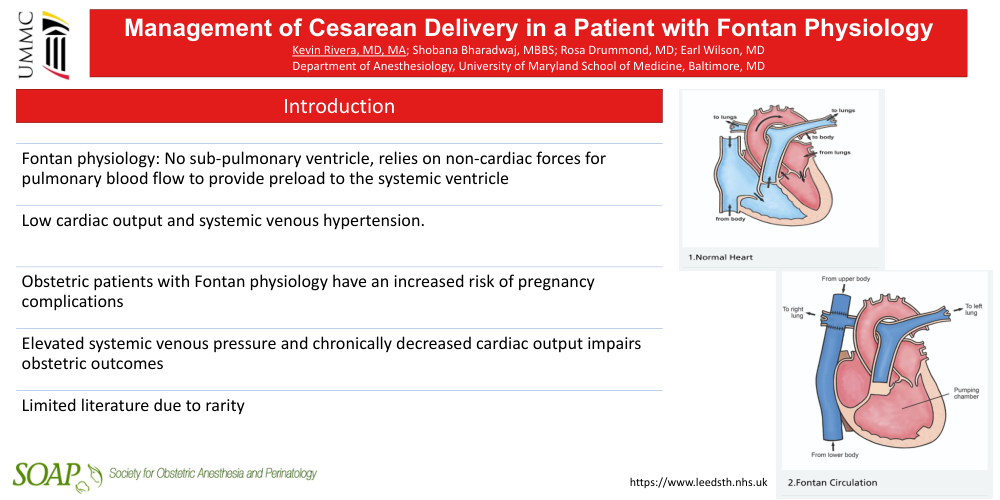
Fontan physiology: No sub-pulmonary ventricle, relies on non-cardiac forces for pulmonary blood flow to provide preload to the systemic ventricle
Low cardiac output and systemic venous hypertension.
Obstetric patients with Fontan physiology have an increased risk of pregnancy complications
Elevated systemic venous pressure and chronically decreased cardiac output impairs obstetric outcomes
Limited literature due to rarity
26yo G1P0 with a h/o double inlet left ventricle status post Fontan procedure in infancy
Admitted for intermittent vaginal bleeding and subchorionic hematoma with stable maternal and fetal status
Multi-D Cardio-Obstetric team plan for scheduled IOL under neuraxial anesthesia to avoid significant increase in PVR and SVR
Emergent c/b at 30_5 weeks due to NRFHR, fibrinogen consumption and placental abruption
Preinduction A-line, Induction with Etomidate, Fentanyl, Succinylcholine. Central Line with precaution for anticipated hemorrhage and use of cardiac medications.
Multi-D ECMO discussion concluded patient was not an ECMO candidate for acute decompensation given severe AI.
Uncomplicated c/s; APGAR scores: 7,8; EBL 800ml, 40% abruption
One episode of NSVT in ICU postop, otherwise unremarkable recovery. Discharged home on PPD 5.
Vaginal delivery: gradual hemodynamic changes, better tolerated in the context of the limited preload reserve and inability to augment cardiac output that characterize Fontan physiology.
Cesarean delivery is reserved for standard obstetric indications or for patients at risk of maternal decompensation, such as acute heart failure, refractory arrhythmias, or the need for coordinated cardiovascular interventions.
Neuraxial analgesia is strongly recommended for labor as it provides effective pain control, reduces catecholamine surges, and allows for rapid conversion to surgical anesthesia if emergent cesarean delivery is required.
Maintaining preload and avoiding increases in pulmonary vascular resistance are critical in Fontan patients. Excessive fluid administration can precipitate heart failure and pulmonary edema.
Multidisciplinary planning with obstetric, cardiology, and anesthesiology teams is critical for the care of these patients.
•Baker DW, Tran D, Cordina R. The Fontan circulation: Is exercise training the solution? Prog Pediatr Cardiol. 2020
•Rychik J, Atz AM, Celermajer DS, et al. Evaluation and management of the child and adult with Fontan circulation: a scientific statement from the American Heart Association. Circulation. 2019;
•Gupta T, Thompson J, Lindley KJ. Management of the Fontan patient during pregnancy. Curr Opin Cardiol. 2023;
•Meng H, Lynch JCG, Arendt KW, et al. Anesthetic care of the pregnant patient with cardiovascular disease: a scientific statement from the American Heart Association. Circulation. 2023