816 posters, 24 topics, 3,314 authors, 1,012 institutions
ePostersLive by SciGen Technologies S.A. All rights reserved.
SAGES 2026 Annual Meeting Emerging Technology Session
March 25-28, 2026 | Tampa, FL, USA

P416
Racial Disparities in Access to Minimally Invasive versus Open Hartmann's Reversal: A NSQIP Analysis
Poster Presenter
Authors
Kristina La, Rachel Ma, Jamila Piri, George Wu, Paola Solis-Pazmino, Moshe Barnajian, Yosef Nasseri
Affiliations
Part of Topic
Colorectal
Racial Disparities in Access to Minimally Invasive versus Open Hartmann's Reversal: A NSQIP Analysis
Backround
-
Racial and ethnic disparities in access to minimally invasive surgery (MIS) remain a persistent challenge in the US
-
Given the technical complexity of Hartmann’s reversal, this procedure provides a meaningful context in which to examine potential differences in surgical access
Aim: To determine whether racial disparities exist in access to MIS versus open surgery for elective Hartmann’s reversals.
Methods
-
Queried ACS NSQIP (2013-2023):
N= 21,109 patients
-
Patients undergoing elective Hartmann’s reversal were identified using Current Procedural Terminology (CPT) codes
-
Open procedures:
44626 (closure of enterostomy with resection and colorectal anastomosis)
-
Minimally invasive procedures:
44227 (laparoscopic closure of enterostomy with resection and anastomosis).
Mean Age (years):
-
White: 61.69
-
AA (56.43)
-
Asian (61.64)
Males (%):
-
White (51.5)
-
AA (54.1)
-
Asian (57.4)
Mean BMI (kg/m²):
-
White (28.8)
-
AA (29.96)
-
Asian (23.92)
*AA: African American/Black
On univariate analysis:
-
African Americans have the highest rates of hypertension, smoking, diabetes, and dialysis (P<0.0001)
-
Asians have the highest rates of diabetes but the lowest rates of hypertension, smoking, dialysis, and COPD (P<0.0001)
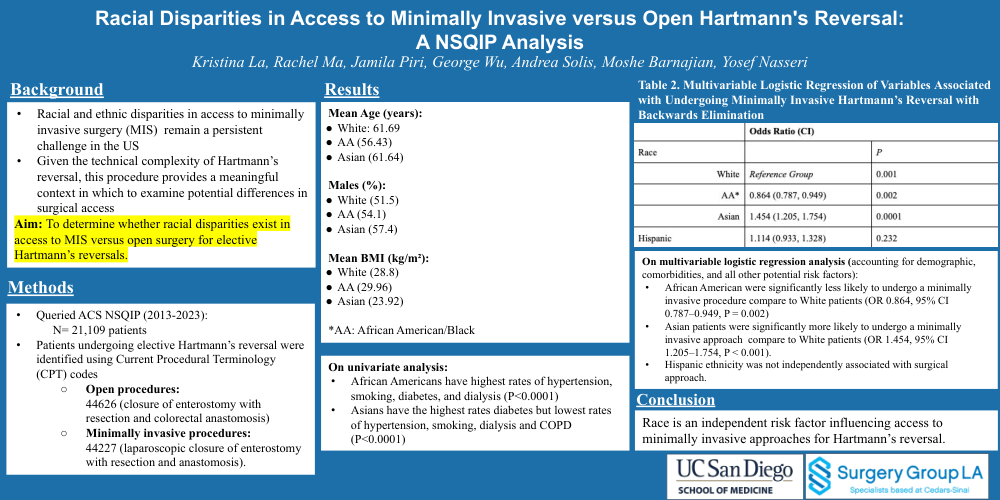
Table 2. Multivariable Logistic Regression of Variables Associated with Undergoing Minimally Invasive Hartmann’s Reversal with Backwards Elimination
On multivariable logistic regression analysis (accounting for demographic, comorbidities, and all other potential risk factors):
-
African Americans were significantly less likely to undergo a minimally invasive procedure compared to White patients (OR 0.864, 95% CI 0.787–0.949, P = 0.002)
-
Asian patients were significantly more likely to undergo a minimally invasive approach compared to White patients (OR 1.454, 95% CI 1.205–1.754, P < 0.001).
-
Hispanic ethnicity was not independently associated with surgical approach.
Race is an independent risk factor influencing access to minimally invasive approaches for Hartmann’s reversal.