816 posters, 24 topics, 3,314 authors, 1,012 institutions
ePostersLive by SciGen Technologies S.A. All rights reserved.
SAGES 2026 Annual Meeting Emerging Technology Session
March 25-28, 2026 | Tampa, FL, USA

P389
Racial and Ethnic Disparities in Elective vs. Emergent Surgical Management of Colorectal Cancer: A 2018-2023 New York State Analysis
Poster Presenter
Part of Topic
Colorectal
Background:
Colorectal cancer is one of the leading causes of cancer-related morbidity and mortality worldwide. Surgical management with colectomy or ostomy creation is a cornerstone of treatment. Emergent procedures, however, are associated with worse perioperative outcomes compared to elective operations. Prior research has demonstrated disparities in surgical urgency across racial and ethnic groups. This study examines differences in the likelihood of undergoing emergent versus elective colorectal cancer surgery among racial and ethnic groups in New York State from 2018 to 2023.
Methods:
A retrospective analysis was performed using 2018 to 2023 New York Statewide Planning and Research Cooperative System (SPARCS) inpatient discharge data. Adult patients undergoing colectomy, ileostomy, or colostomy for colorectal cancer were included. Patients were categorized by race/ethnicity and surgical urgency (elective vs. emergent). Odds ratios (ORs) with 95% confidence intervals (CI) were calculated to assess differences in emergent colorectal cancer surgery across racial/ethnic groups, with White Non-Hispanic patients serving as the reference group.
Results:
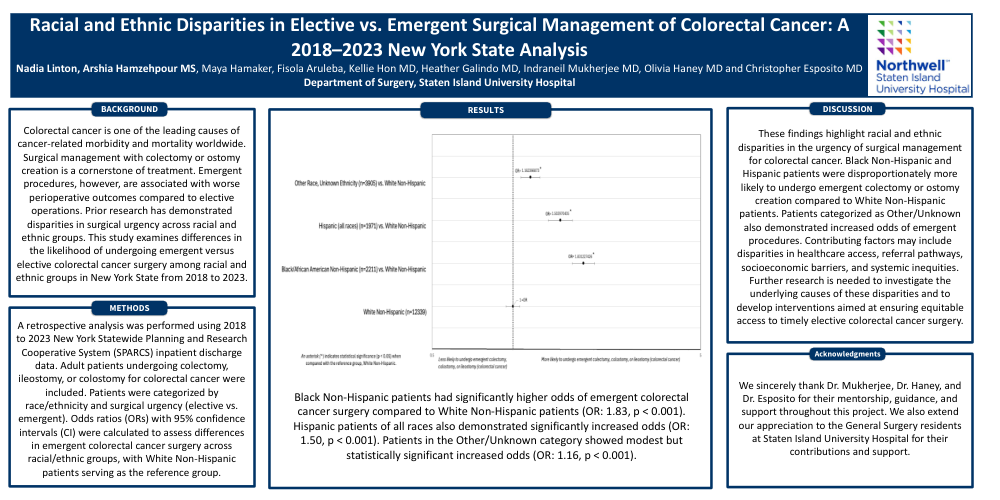
Black Non-Hispanic patients had significantly higher odds of emergent colorectal cancer surgery compared to White Non-Hispanic patients (OR: 1.83, p < 0.001). Hispanic patients of all races also demonstrated significantly increased odds (OR: 1.50, p < 0.001). Patients in the Other/Unknown category showed modest but statistically significant increased odds (OR: 1.16, p < 0.001).
Discussion:
These findings highlight racial and ethnic disparities in the urgency of surgical management for colorectal cancer. Black Non-Hispanic and Hispanic patients were disproportionately more likely to undergo emergent colectomy or ostomy creation compared to White Non-Hispanic patients. Patients categorized as Other/Unknown also demonstrated increased odds of emergent procedures. Contributing factors may include disparities in healthcare access, referral pathways, socioeconomic barriers, and systemic inequities. Further research is needed to investigate the underlying causes of these disparities and to develop interventions aimed at ensuring equitable access to timely elective colorectal cancer surgery.