2,281 posters, 63 videos, 56 audios, 43 topics, 18 sessions, 6,174 authors, 2,323 institutions
ePostersLive by SciGen Technologies S.A. All rights reserved.
RCOG World Congress 2025
June 23 - 25, 2025 | ExCeL London, UK
EP.0947
Biologics in Pregnancy - Analysis of Feto-maternal outcome and Patient feedback survey
Poster Presenter
Part of Topic
High risk pregnancy
Evaluation of pregnancy outcome in women with Inflammatory Rheumatic Disease on biologics.
2.Service evaluation of the Combined Rheumatology Obstetrics clinic held in our hospital.
Design- Retrospective observational study
Retrospective data was collected on interventions and outcomes of pregnancies in 9 women with IRD on biologics seen in the Combined Rheumatology/ Obstetric Clinic from January 2024 to December 2024 reviewing clinic letters and medical notes.
Patient satisfaction surveys were sent out to these 9 patients with a 100% response rate.
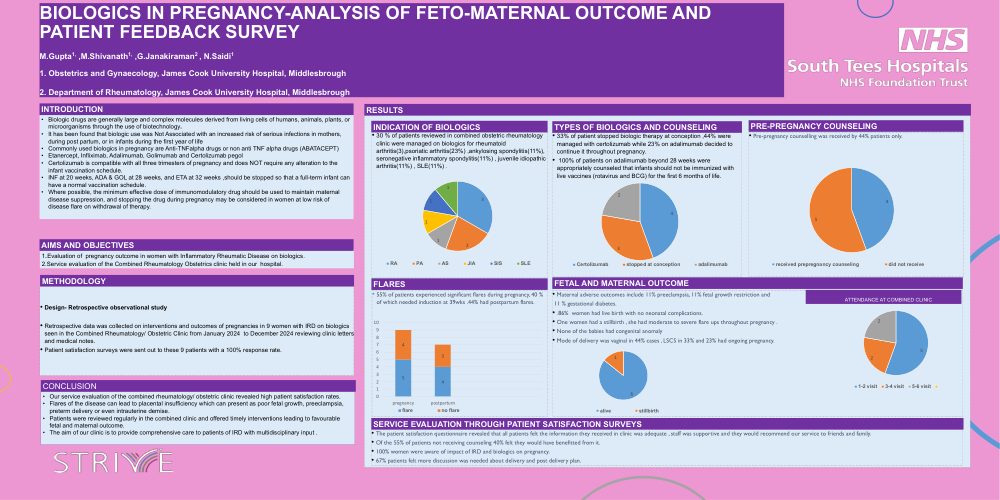
30 % of patients reviewed in combined obstetric rheumatology clinic were managed on biologics for rheumatoid arthritis(3),psoriatic arthritis(23%) ,ankylosing spondylitis(11%), seronegative inflammatory spondylitis(11%) , juvenile idiopathic arthritis(11%) , SLE(11%) .
33% of patient stopped biologic therapy at conception ,44% were managed with certolizumab while 23% on adalimumab decided to continue it throughout pregnancy.
100% of patients on adalimumab beyond 28 weeks were appropriately counseled that infants should not be immunized with live vaccines (rotavirus and BCG) for the first 6 months of life.
55% of patients experienced significant flares during pregnancy, 40 % of which needed induction at 39wks .44% had postpartum flares.
Maternal adverse outcomes include 11% preeclampsia, 11% fetal growth restriction and
11 % gestational diabetes.
.86% women had live birth with no neonatal complications.
One women had a stillbirth , she had moderate to severe flare ups throughout pregnancy .
None of the babies had congenital anomaly
Mode of delivery was vaginal in 44% cases , LSCS in 33% and 23% had ongoing pregnancy.
The patient satisfaction questionnaire revealed that all patients felt the information they received in clinic was adequate , staff was supportive and they would recommend our service to friends and family.
Of the 55% of patients not receiving counseling 40% felt they would have benefitted from it.
100% women were aware of impact of IRD and biologics on pregnancy.
67% patients felt more discussion was needed about delivery and post delivery plan.