2,281 posters, 63 videos, 56 audios, 43 topics, 18 sessions, 6,174 authors, 2,323 institutions
ePostersLive by SciGen Technologies S.A. All rights reserved.
RCOG World Congress 2025
June 23 - 25, 2025 | ExCeL London, UK
EP.0094
Analysis of DNA Rates and Failsafe Mechanisms in a Colposcopy Unit
Poster Presenter
Authors
Affiliations
Part of Topic
Colposcopy & cervical pathology
Title: Analysis of DNA Rates and Failsafe Mechanisms in a Colposcopy Unit
Dr Anusuya Bansal, Diana Princess of Wales Hospital, Grimsby, UK
Dr Sreelatha Tumula, Calderdale Royal Hospital, Halifax, UK
Objective:
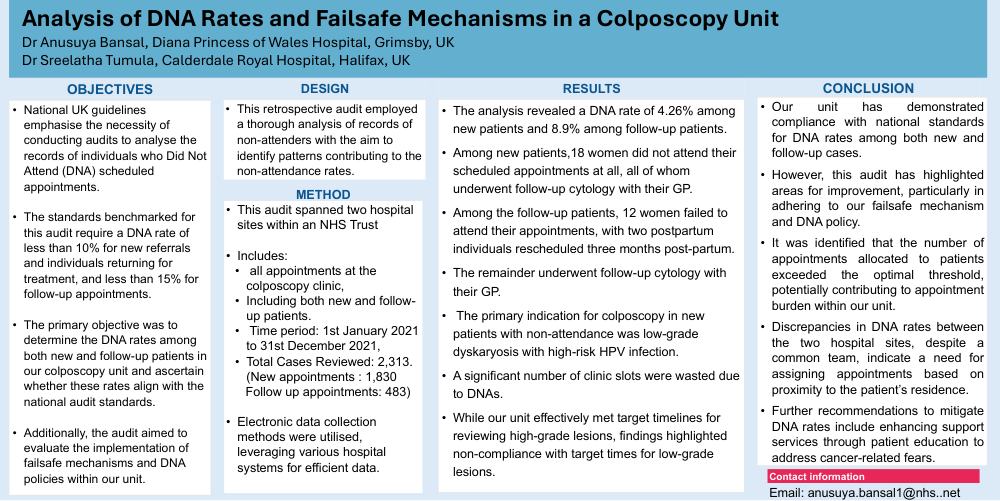
National UK guidelines emphasise the necessity of conducting audits to analyse the records of individuals who Did Not Attend (DNA) scheduled appointments. The standards benchmarked for this audit require a DNA rate of less than 10% for new referrals and individuals returning for treatment, and less than 15% for follow-up appointments. The primary objective was to determine the DNA rates among both new and follow-up patients in our colposcopy unit and ascertain whether these rates align with the national audit standards. Additionally, the audit aimed to evaluate the implementation of failsafe mechanisms and DNA policies within our unit.
Design:
This retrospective audit employed a thorough analysis of records of non-attenders with the aim to identify patterns contributing to the non-attendance rates.
Method:
This audit spanned two hospital sites within an NHS Trust, encompassing all appointments at the colposcopy clinic, including both new and follow-up patients, over the period from 1st January 2021 to 31st December 2021, totalling 2,313 cases. Of these cases, there were 1,830 new appointments and 483 follow-up appointments reviewed. Electronic data collection methods were utilised, leveraging various hospital systems for efficient data.
Results:
The analysis revealed a DNA rate of 4.26% among new patients and 8.9% among follow-up patients. Among new patients,18 women did not attend their scheduled appointments at all, all of whom underwent follow-up cytology with their GP. Among the follow-up patients, 12 women failed to attend their appointments, with two postpartum individuals rescheduled three months post-partum.The remainder underwent follow-up cytology with their GP. The primary indication for colposcopy in new patients with non-attendance was low-grade dyskaryosis with high-risk HPV infection. A significant number of clinic slots were wasted due to DNAs. While our unit effectively met target timelines for reviewing high-grade lesions, findings highlighted non-compliance with target times for low-grade lesions.
Conclusion:
Our unit has demonstrated compliance with national standards for DNA rates among both new and follow-up cases. However, this audit has highlighted areas for improvement, particularly in adhering to our failsafe mechanism and DNA policy. It was identified that the number of appointments allocated to patients exceeded the optimal threshold, potentially contributing to appointment burden within our unit. Discrepancies in DNA rates between the two hospital sites, despite a common team, indicate a need for assigning appointments based on proximity to the patient's residence. Further recommendations to mitigate DNA rates include enhancing support services through patient education to address cancer-related fears.