2,281 posters, 63 videos, 56 audios, 43 topics, 18 sessions, 6,174 authors, 2,323 institutions
ePostersLive by SciGen Technologies S.A. All rights reserved.
RCOG World Congress 2025
June 23 - 25, 2025 | ExCeL London, UK
EP.0943
Audit on polyhydramnios management and outcome.
Poster Presenter
Part of Topic
High risk pregnancy
Introduction
Polyhydramnios, characterized by excessive accumulation of amniotic fluid, affects 1-3% of pregnancies. This condition is associated with adverse pregnancy outcomes such as:
• Preterm prelabor rupture of membranes (PPROM)
• Preterm labor (PTL),
• Abnormal fetal presentations
• Increased caesarean section rates
• Cord prolapse
• Placental abruption
• Postpartum hemorrhage (PPH)
• Increased perinatal complications
Identifying underlying causes—idiopathic (50-60%), maternal diabetes, fetal anomalies, infections, anaemia, or placental abnormalities—is crucial for optimal management.
Objectives
This audit aimed to evaluate the current management strategies for polyhydramnios and their impact on clinical outcomes, identifying areas for improvement to optimize care for affected pregnancies.
Methodology
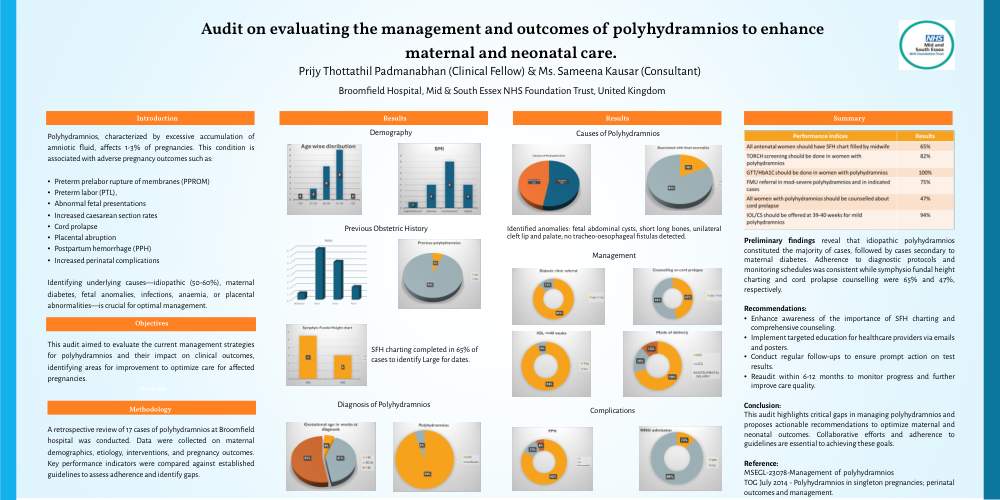
A retrospective review of 17 cases of polyhydramnios at Broomfield hospital was conducted. Data were collected on maternal demographics, etiology, interventions, and pregnancy outcomes. Key performance indicators were compared against established guidelines to assess adherence and identify gaps.
Preliminary findings reveal that idiopathic polyhydramnios constituted the majority of cases, followed by cases secondary to maternal diabetes. Adherence to diagnostic protocols and monitoring schedules was consistent while symphysio fundal height charting and cord prolapse counselling were 65% and 47%,
respectively.
Recommendations:
• Enhance awareness of the importance of SFH charting and comprehensive counseling.
• Implement targeted education for healthcare providers via emails and posters.
• Conduct regular follow-ups to ensure prompt action on test results.
• Reaudit within 6-12 months to monitor progress and further improve care quality.
Conclusion:
This audit highlights critical gaps in managing polyhydramnios and proposes actionable recommendations to optimize maternal and neonatal outcomes. Collaborative efforts and adherence to guidelines are essential to achieving these goals.
Reference:
MSEGL-23078-Management of polyhydramnios
TOG July 2014 - Polyhydramnios in singleton pregnancies; perinatal outcomes and management.