2,281 posters, 63 videos, 56 audios, 43 topics, 18 sessions, 6,174 authors, 2,323 institutions
ePostersLive by SciGen Technologies S.A. All rights reserved.
RCOG World Congress 2025
June 23 - 25, 2025 | ExCeL London, UK
EP.0931
Systematic Review of Uterine Herniation During Pregnancy: Clinical Perspectives and Outcomes
Poster Presenter
Authors
Ciara Higley, Susannah Louis, Zia Kuyper, Maryam Abdelkarim, Joshua Odendaal
Affiliations
Warwick Medical School, University of Warwick, The Medical School, Newcastle University, Division of Biomedical Sciences, Clinical Sciences Research Laboratories, Warwick Medical School, University of Warwick
Part of Topic
High risk pregnancy
Systematic Review of Uterine Herniation During Pregnancy: Clinical Perspectives and Outcomes
Ciara Higley, Susannah Louis, Zia Kuyper, Dr Maryam Abdelkarim, Dr Joshua Odendaal
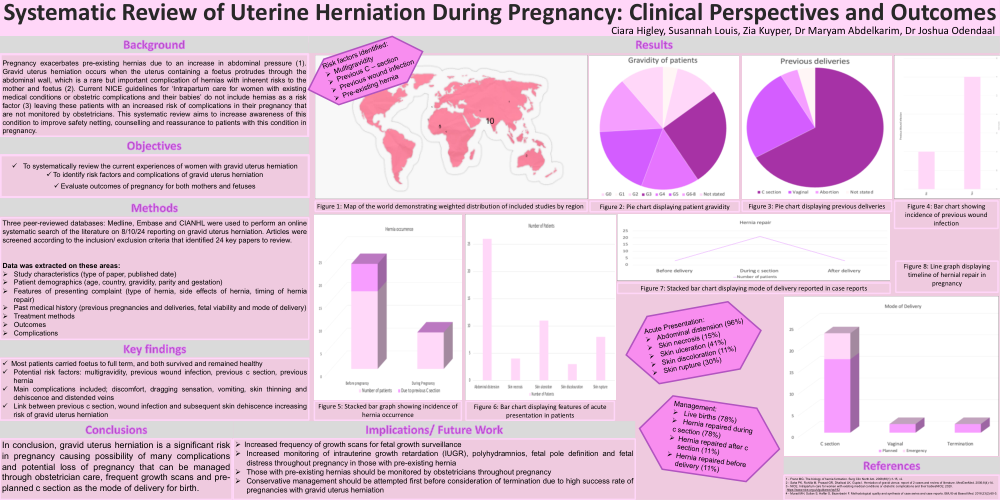
Pregnancy exacerbates pre-existing hernias due to an increase in abdominal pressure (1). Gravid uterus herniation occurs when the uterus containing a foetus protrudes through the abdominal wall, which is a rare but important complication of hernias with inherent risks to the mother and foetus (2). Current NICE guidelines for ‘Intrapartum care for women with existing medical conditions or obstetric complications and their babies’ do not include hernias as a risk factor (3) leaving these patients with an increased risk of complications in their pregnancy that are not monitored by obstetricians. This systematic review aims to increase awareness of this condition to improve safety netting, counselling and reassurance to patients with this condition in pregnancy.
ü To systematically review the current experiences of women with gravid uterus herniation
üTo identify risk factors and complications of gravid uterus herniation
üEvaluate outcomes of pregnancy for both mothers and fetuses
Three peer-reviewed databases: Medline, Embase and CIANHL were used to perform an online systematic search of the literature on 8/10/24 reporting on gravid uterus herniation. Articles were screened according to the inclusion/ exclusion criteria that identified 24 key papers to review.
Data was extracted on these areas:
-
Ø Study characteristics (type of paper, published date)
-
Ø Patient demographics (age, country, gravidity, parity and gestation)
-
Ø Features of presenting complaint (type of hernia, side effects of hernia, timing of hernia
repair)
-
Ø Past medical history (previous pregnancies and deliveries, fetal viability and mode of delivery)
-
Ø Treatment methods
-
Ø Outcomes
-
Ø Complications
- ü Most patients carried foetus to full term, and both survived and remained healthy
- ü Potential risk factors: multigravidity, previous wound infection, previous c section, previous hernia
- ü Main complications included; discomfort, dragging sensation, vomiting, skin thinning and dehiscence and distended veins
- ü Link between previous c section, wound infection and subsequent skin dehiscence increasing risk of gravid uterus herniation
In conclusion, gravid uterus herniation is a significant risk in pregnancy causing possibility of many complications and potential loss of pregnancy that can be managed through obstetrician care, frequent growth scans and pre- planned c section as the mode of delivery for birth.
Ø Increased frequency of growth scans for fetal growth surveillance
Ø Increased monitoring of intrauterine growth retardation (IUGR), polyhydramnios, fetal pole definition and fetal distress throughout pregnancy in those with pre-existing hernia
Ø Those with pre-existing hernias should be monitored by obstetricians throughout pregnancy
Ø Conservative management should be attempted first before consideration of termination due to high success rate of pregnancies with gravid uterus herniation