2,281 posters, 63 videos, 56 audios, 43 topics, 18 sessions, 6,174 authors, 2,323 institutions
ePostersLive by SciGen Technologies S.A. All rights reserved.
RCOG World Congress 2025
June 23 - 25, 2025 | ExCeL London, UK
EP.0930
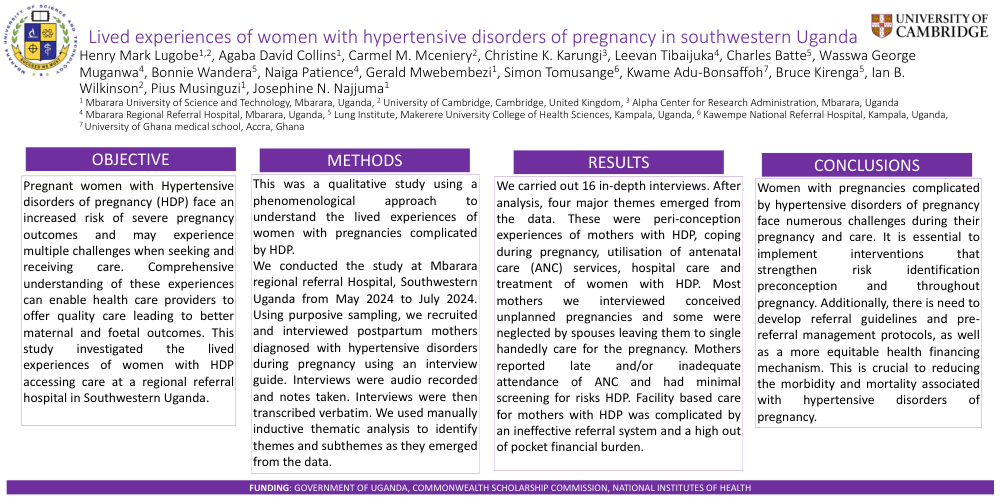
Lived experiences of women with hypertensive disorders of pregnancy in southwestern Uganda
Poster Presenter
Authors
Henry Mark Lugobe, David Collins Agaba, Carmel M. Mceniery, Christine K. Karungi, Leevan Tibaijuka, Charles Batte, Wasswa George Muganwa, Bonnie Wandera, Patience Naiga, Gerald Mwebembezi, Simon Tomusange, Kwame Adu-Bonsaffoh, Bruce Kirenga, Ian B Wilkinson, Pius Musinguzi, Josephine N Najjuma
Affiliations
University of Ghana Medical School, University of Cambridge, Mbarara University of Science and Technology, Alpha Center for Research Administration, Mbarara Regional Referral Hospital, Makerere University College of Health Sciences, Kawempe National Referral Hospital
Part of Topic
High risk pregnancy
Objective
Pregnant women with Hypertensive disorders of pregnancy (HDP) face an increased risk of severe pregnancy outcomes and may experience multiple challenges when seeking and receiving care. Comprehensive understanding of these experiences can enable health care providers to offer quality care leading to better maternal and foetal outcomes. This study investigated the lived experiences of women with HDP accessing care at a regional referral hospital in Southwestern Uganda.
Design: This was a qualitative study using a phenomenological approach to understand the lived experiences of women with pregnancies complicated by HDP.
Method
We conducted the study at Mbarara regional referral Hospital, Southwestern Uganda from May 2024 to July 2024. Using purposive sampling, we recruited and interviewed postpartum mothers diagnosed with hypertensive disorders during pregnancy using an interview guide. Interviews were audio recorded and notes taken. Interviews were then transcribed verbatim. We used manually inductive thematic analysis to identify themes and subthemes as they emerged from the data.
Results
We carried out 16 in-depth interviews. After analysis, four major themes emerged from the data. These were peri-conception experiences of mothers with HDP, coping during pregnancy, utilisation of antenatal care (ANC) services, hospital care and treatment of women with HDP. Most mothers we interviewed conceived unplanned pregnancies and some were neglected by spouses leaving them to single handedly care for the pregnancy. Mothers reported late and/or inadequate attendance of ANC and had minimal screening for risks HDP. Facility based care for mothers with HDP was complicated by an ineffective referral system and a high out of pocket financial burden.
Conclusions
Women with pregnancies complicated by hypertensive disorders of pregnancy face numerous challenges during their pregnancy and care. It is essential to implement interventions that strengthen risk identification preconception and throughout pregnancy. Additionally, there is need to develop referral guidelines and pre-referral management protocols, as well as a more equitable health financing mechanism. This is crucial to reducing the morbidity and mortality associated with hypertensive disorders of pregnancy.