2,281 posters, 63 videos, 56 audios, 43 topics, 18 sessions, 6,174 authors, 2,323 institutions
ePostersLive by SciGen Technologies S.A. All rights reserved.
RCOG World Congress 2025
June 23 - 25, 2025 | ExCeL London, UK
EP.0929
Audit on Iron deficiency anaemia during pregnancy & puerperium at a district hospital.
Poster Presenter
Authors
Affiliations
Part of Topic
High risk pregnancy
Audit on Iron deficiency anaemia during pregnancy & puerperium at a district hospital.
Iron deficiency anaemia in pregnancy and puerperium remains a serious health concern in the UK as highlighted by the 2018/2019 Comparative Audit of the Management of Maternal Anaemia and Iron Deficiency in the UK and Ireland. It is linked to significant maternal and foetal complications, such as increased morbidity and mortality, greater susceptibility to infections, low birth weight, preterm labour, and an increased risk of postpartum haemorrhage.
The British Society for Haematology (BSH) has published guidance for managing iron deficiency in pregnancy and puerperium, emphasizing the importance of early diagnosis and timely treatment to reduce the associated risks.
Objectives
To evaluate whether the department's current practices align with the guidelines in detecting and managing iron deficiency anaemia during pregnancy and the immediate postpartum period to ensure prompt identification and appropriate management of these patients.
Methodology
A retrospective audit was conducted on 50 consecutive deliveries in January 2024 at Basildon University Hospital. The data was collated from the patient's records from the antenatal period through to the puerperium and analysed using Microsoft Excel.
Results
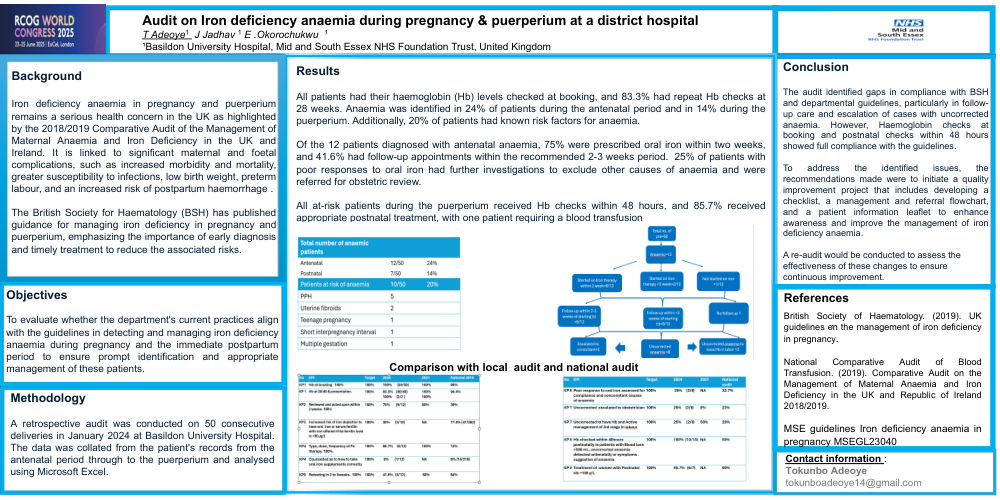
All patients had their haemoglobin (Hb) levels checked at booking, and 83.3% had repeat Hb checks at 28 weeks. Anaemia was identified in 24% of patients during the antenatal period and in 14% during the puerperium. Additionally, 20% of patients had known risk factors for anaemia.
Of the 12 patients diagnosed with antenatal anaemia, 75% were prescribed oral iron within two weeks, and 41.6% had follow-up appointments within the recommended 2-3 weeks period. 25% of patients with poor responses to oral iron had further investigations to exclude other causes of anaemia and were referred for obstetric review.
All at-risk patients during the puerperium received Hb checks within 48 hours, and 85.7% received appropriate postnatal treatment, with one patient requiring a blood transfusion.
Conclusion
The audit identified gaps in compliance with BSH and departmental guidelines, particularly in follow-up care and escalation of cases with uncorrected anaemia. However, Haemoglobin checks at booking and postnatal checks within 48 hours showed full compliance with the guidelines.
To address the identified issues, the recommendations made were to initiate a quality improvement project that includes developing a checklist, a management and referral flowchart, and a patient information leaflet to enhance awareness and improve the management of iron deficiency anaemia.
A re-audit would be conducted to assess the effectiveness of these changes to ensure continuous improvement.