2,281 posters, 63 videos, 56 audios, 43 topics, 18 sessions, 6,174 authors, 2,323 institutions
ePostersLive by SciGen Technologies S.A. All rights reserved.
RCOG World Congress 2025
June 23 - 25, 2025 | ExCeL London, UK
EP.0917
Evaluating the Impact of Preterm Prevention Clinic on High-Risk Patient Group
Poster Presenter
Authors
Affiliations
Part of Topic
High risk pregnancy
Effectiveness of a Preterm Prevention Clinic in Improving Maternal and Neonatal Outcomes: A Retrospective Service Evaluation Audit
Objective
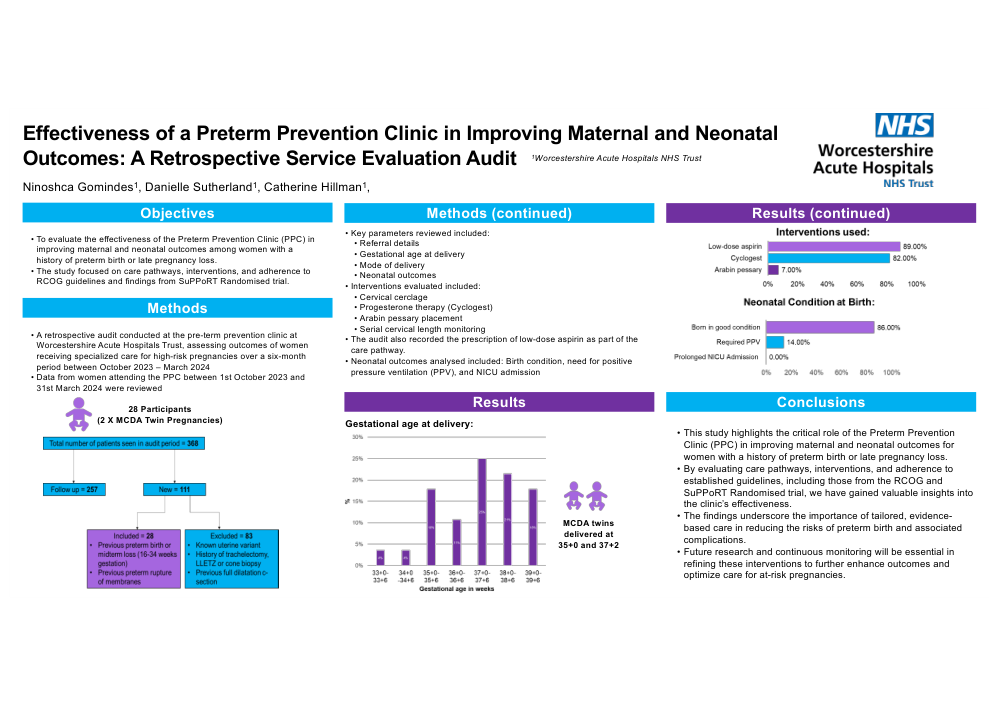
To evaluate the effectiveness of the Preterm Prevention Clinic (PPC) in improving maternal and neonatal outcomes among women with a history of preterm birth or late pregnancy loss. The study focused on care pathways, interventions, and adherence to RCOG guidelines and findings from SuPPoRT Randomised trial.
Design
A retrospective audit conducted at the PPC, assessing outcomes of women receiving specialized care for high-risk pregnancies over a six-month period.
Method
Data from women attending the PPC between 1st October 2023 and 31st March 2024 were reviewed. Key parameters included referral details, gestational age at delivery, mode of delivery, and neonatal outcomes. Interventions evaluated included cervical cerclage, progesterone therapy (Cyclogest), Arabin pessary placement, and serial cervical length monitoring. The audit also recorded the prescription of low-dose aspirin as part of the care pathway. Neonatal outcomes, including birth condition, need for positive pressure ventilation (PPV), and NICU admissions, were analyzed.
Results
Twenty-eight women, including two twin pregnancies, were included during the audit period. Prophylactic Progesterone therapy with Cyclogest was initiated in 82% (23/28), and 7% (2/28) required Arabin pessary placement due to further cervical shortening. Low-dose aspirin was prescribed to 89% (25/28). The mean gestational age at delivery was 37 weeks and 1 day. Preterm birth before 34 weeks occurred in only one case, reflecting the clinic's success in prolonging pregnancy duration.
Among the 29 neonates delivered, 86% (25/29) were born in good condition. Four neonates (14%) required PPV at birth, but no cases of neonatal respiratory distress or prolonged NICU admissions were reported, demonstrating effective antenatal management and improved neonatal outcomes.
Conclusions
In conclusion, this study highlights the critical role of the Preterm Prevention Clinic (PPC) in improving maternal and neonatal outcomes for women with a history of preterm birth or late pregnancy loss. By evaluating care pathways, interventions, and adherence to established guidelines, including those from the RCOG and SuPPoRT Randomised trial, we have gained valuable insights into the clinic’s effectiveness. The findings underscore the importance of tailored, evidence-based care in reducing the risks of preterm birth and associated complications. Future research and continuous monitoring will be essential in refining these interventions to further enhance outcomes and optimize care for at-risk pregnancies.