2,281 posters, 63 videos, 56 audios, 43 topics, 18 sessions, 6,174 authors, 2,323 institutions
ePostersLive by SciGen Technologies S.A. All rights reserved.
RCOG World Congress 2025
June 23 - 25, 2025 | ExCeL London, UK
EP.0003
Emotional Challenges of Women Undergoing Second Trimester Termination Due to Fetal Anomalies
Poster Presenter
Authors
Zeba Afreen, Vatsla Dadhwal, Vidushi Kulshrestha, Sujata Satapathy, K Aparna Sharma, Anubhuti Rana, Richa Vatsa, Juhi Bharti
Affiliations
Part of Topic
Abortion care
introduction:
Emotional Challenges of Women Undergoing Second Trimester MTP Due to Fetal Anomalies
introduction:
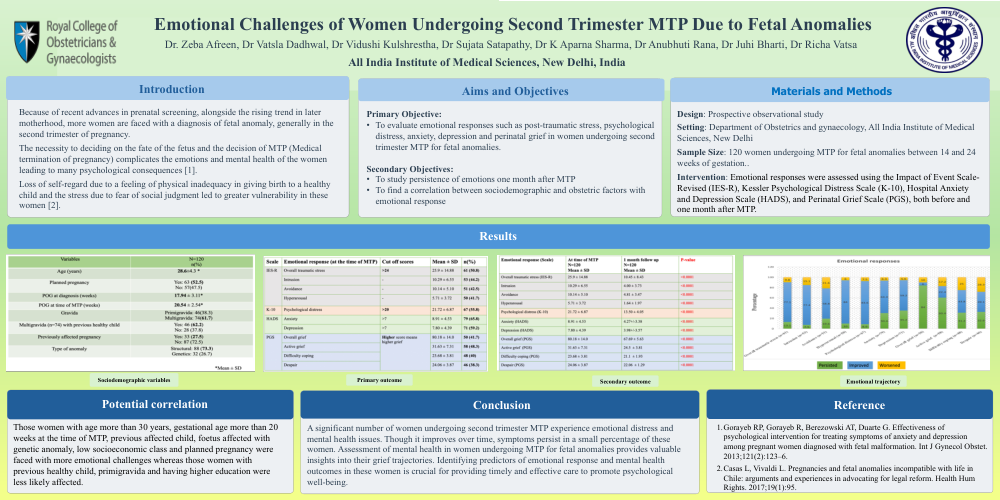
Because of recent advances in prenatal screening, alongside the rising trend in later motherhood, more women are faced with a diagnosis of fetal anomaly, generally in the second trimester of pregnancy.
The necessity to deciding on the fate of the fetus and the decision of MTP (Medical termination of pregnancy) complicates the emotions and mental health of the women leading to many psychological consequences [1].
Loss of self-regard due to a feeling of physical inadequacy in giving birth to a healthy child and the stress due to fear of social judgment led to greater vulnerability in these women [2].
Aims and objectives:
Primary Objective:
Secondary Objectives:
Design: Prospective observational study
Setting: Department of Obstetrics and gynaecology, All India Institute of Medical Sciences, New Delhi
Sample Size: 120 women undergoing MTP for fetal anomalies between 14 and 24 weeks of gestation..
Intervention: Emotional responses were assessed using the Impact of Event Scale-Revised (IES-R), Kessler Psychological Distress Scale (K-10), Hospital Anxiety and Depression Scale (HADS), and Perinatal Grief Scale (PGS), both before and one month after MTP.
potential correlation:
Those women with age more than 30 years, gestational age more than 20 weeks at the time of MTP, previous affected child, foetus affected with genetic anomaly, low socioeconomic class and planned pregnancy were faced with more emotional challenges whereas those women with previous healthy child, primigravida and having higher education were less likely affected.
conclusion:
A significant number of women undergoing second trimester MTP experience emotional distress and mental health issues. Though it improves over time, symptoms persist in a small percentage of these women. Assessment of mental health in women undergoing MTP for fetal anomalies provides valuable insights into their grief trajectories. Identifying predictors of emotional response and mental health outcomes in these women is crucial for providing timely and effective care to promote psychological well-being.