2,281 posters, 63 videos, 56 audios, 43 topics, 18 sessions, 6,174 authors, 2,323 institutions
ePostersLive by SciGen Technologies S.A. All rights reserved.
RCOG World Congress 2025
June 23 - 25, 2025 | ExCeL London, UK
EP.0315
Challenges in Diagnosing Ogilvie's Syndrome (OS) following Emergency Cesarean Section (EMCS)
Part of Topic
Education
Ogilvie’s Syndrome is acute large bowel obstruction without a mechanical cause. It results in severe colonic dilatation and is a form of pseudo-obstruction. Theincidence is 1:1500 deliveries, with 400 cases in the UK annually, and is a life-threatening complication. Risk factors encompass EMCS, postpartum haemorrhage (PPH) and general anaesthesia (GA). Manycases respond adequately to conservative management or medical interventions such as neostigmine or boweldecompression, however, urgent surgical intervention becomes necessary in the event of perforation.
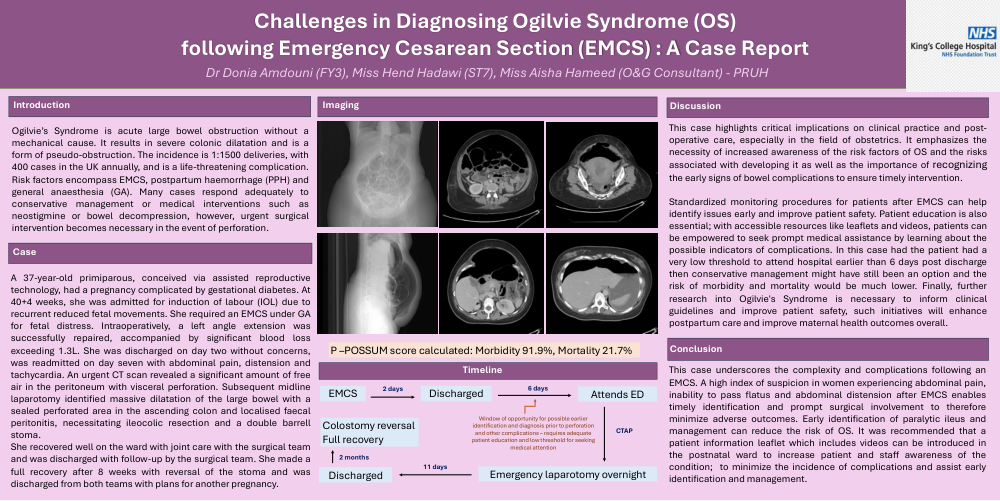
A 37-year-old primiparous, conceived via assisted reproductive technology, had a pregnancy complicated by gestational diabetes. At 40+4 weeks, she was admitted for induction of labour (IOL) due to recurrent reduced fetal movements. She required an EMCS under GA for fetal distress. Intraoperatively, a left angle extension was successfully repaired, accompanied by significant blood loss exceeding 1.3L. She was discharged on day two without concerns, was readmitted on day seven with abdominal pain, distension and tachycardia. An urgent CT scan revealed a significant amount of free air in the peritoneum with visceral perforation. Subsequent midline laparotomy identified massive dilatation of the large bowel with a sealed perforated area in the ascending colon and localised faecal peritonitis, necessitating ileocolic resection and a double barrellstoma.
She recovered well on the ward with joint care with the surgical team andwas discharged with follow-up by the surgical team. She made a full recovery after 8 weeks with reversal of the stoma and was discharged from both teams with plans for another pregnancy
This case highlights critical implications on clinical practice and post-operative care, especially in the field of obstetrics. It emphasizes the necessity of increased awareness of the risk factors of OS and the risks associated with developing it as well as the importance of recognizingthe early signs of bowel complications to ensure timely intervention.
Standardized monitoring procedures for patients after EMCS can help identify issues early and improve patient safety. Patient education is also essential; with accessible resources like leaflets and videos, patients can be empowered to seek prompt medical assistance by learning about the possible indicators of complications. In this case had the patient had a very low threshold to attend hospital earlier than 6 days post discharge then conservative management might have still been an option and the risk of morbidity and mortality would be much lower. Finally, further research into Ogilvie's Syndrome is necessary to inform clinical guidelines and improve patient safety, such initiatives will enhance postpartum care and improve maternal health outcomes overall.
This case underscores the complexity and complications following an EMCS. A high index of suspicion in women experiencing abdominal pain, inability to pass flatus and abdominal distension after EMCS enables timely identification and prompt surgical involvement to therefore minimize adverse outcomes. Early identification of paralytic ileus and management can reduce the risk of OS. It was recommended that a patient information leaflet which includes videos can be introduced in the postnatal ward to increase patient and staff awareness of the condition; to minimize theincidence of complications andassist early identification and management.