2,281 posters, 63 videos, 56 audios, 43 topics, 18 sessions, 6,174 authors, 2,323 institutions
ePostersLive by SciGen Technologies S.A. All rights reserved.
RCOG World Congress 2025
June 23 - 25, 2025 | ExCeL London, UK
EP.0297
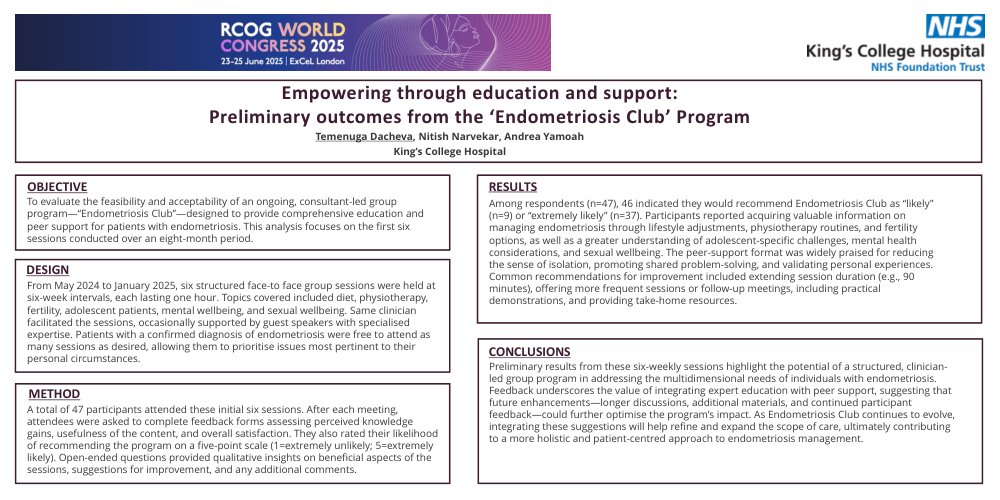
Empowering through education and support: Preliminary outcomes from the ‘Endometriosis Club’ Program
Poster Presenter
Authors
Affiliations
Part of Topic
Education
Empowering through education and support: Preliminary outcomes from the ‘Endometriosis Club’ Program
Objective:
To evaluate the feasibility and acceptability of an ongoing, consultant-led group program—“Endometriosis Club”—designed to provide comprehensive education and peer support for patients with endometriosis. This analysis focuses on the first six sessions conducted over an eight-month period.
Design:
From May 2024 to January 2025, six structured face-to face group sessions were held at six-week intervals, each lasting one hour. Topics covered included diet, physiotherapy, fertility, adolescent patients, mental wellbeing, and sexual wellbeing. Same clinician facilitated the sessions, occasionally supported by guest speakers with specialised expertise. Patients with a confirmed diagnosis of endometriosis were free to attend as many sessions as desired, allowing them to prioritise issues most pertinent to their personal circumstances.
Method:
A total of 47 participants attended these initial six sessions. After each meeting, attendees were asked to complete feedback forms assessing perceived knowledge gains, usefulness of the content, and overall satisfaction. They also rated their likelihood of recommending the program on a five-point scale (1=extremely unlikely; 5=extremely likely). Open-ended questions provided qualitative insights on beneficial aspects of the sessions, suggestions for improvement, and any additional comments.
Results:
Among respondents (n=47), 46 indicated they would recommend Endometriosis Club as “likely” (n=9) or “extremely likely” (n=37). Participants reported acquiring valuable information on managing endometriosis through lifestyle adjustments, physiotherapy routines, and fertility options, as well as a greater understanding of adolescent-specific challenges, mental health considerations, and sexual wellbeing. The peer-support format was widely praised for reducing the sense of isolation, promoting shared problem-solving, and validating personal experiences. Common recommendations for improvement included extending session duration (e.g., 90 minutes), offering more frequent sessions or follow-up meetings, including practical demonstrations, and providing take-home resources.
Conclusions:
Preliminary results from these six-weekly sessions highlight the potential of a structured, clinician-led group program in addressing the multidimensional needs of individuals with endometriosis. Feedback underscores the value of integrating expert education with peer support, suggesting that future enhancements—longer discussions, additional materials, and continued participant feedback—could further optimise the program’s impact. As Endometriosis Club continues to evolve, integrating these suggestions will help refine and expand the scope of care, ultimately contributing to a more holistic and patient-centred approach to endometriosis management.