2,281 posters, 63 videos, 56 audios, 43 topics, 18 sessions, 6,174 authors, 2,323 institutions
ePostersLive by SciGen Technologies S.A. All rights reserved.
RCOG World Congress 2025
June 23 - 25, 2025 | ExCeL London, UK
EP.0262
A diagnostic dilemma following salpingectomy: could it be re-implantation of trophoblastic tissue?
Poster Presenter
Authors
Alina-Maria Unipan, Nicoleta Mureanu, Elisabeth Bean, Dele Olorunshola, Mona Sharma
Affiliations
Part of Topic
Early pregnancy complications/early pregnancy and acute gynaecology
A diagnostic dilemma following salpingectomy: could it be re-implantation of trophoblastic tissue?
Ms Alina-Maria Unipan, Dr Nicoleta Mureanu, Miss Elisabeth Bean, Mr Dele Olorunshola, Miss Mona Sharma
Queen's Hospital, Romford, United Kingdom
Case report
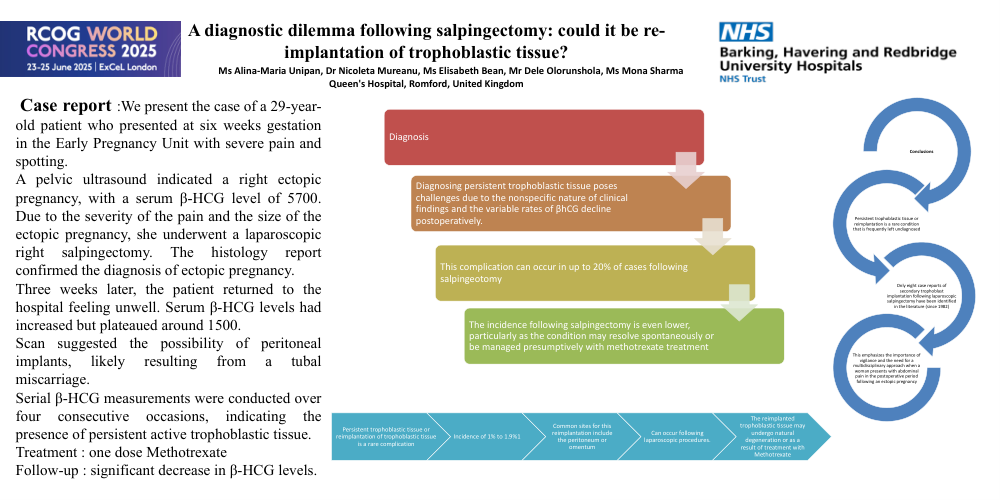
Objective: Persistent trophoblastic tissue or reimplantation of trophoblastic tissue is a rare complication, with an estimated incidence of 1% to 1.9%1. The most common sites for this reimplantation include the peritoneum or omentum and it can occur following laparoscopic procedures. The reimplanted trophoblastic tissue may undergo natural degeneration or as a result of treatment with Methotrexate
Case report: We present the case of a 29-year-old patient who presented at six weeks gestation in the Early Pregnancy Unit with severe pain and spotting. A pelvic ultrasound indicated a right ectopic pregnancy, with a serum β-HCG level of 5700. Due to the severity of the pain and the size of the ectopic pregnancy, she underwent a laparoscopic right salpingectomy. The histology report confirmed the diagnosis of ectopic pregnancy.
Three weeks later, the patient returned to the hospital feeling unwell. Serum β-HCG levels had increased but plateaued around 1500. A repeat scan suggested the possibility of peritoneal implants, likely resulting from a tubal miscarriage. Serial β-HCG measurements were conducted over four consecutive occasions, indicating the presence of persistent active trophoblastic tissue. A multidisciplinary approach was employed, and the decision was made to administer one dose of methotrexate. Follow-up evaluations indicated a significant decrease in β-HCG levels.
Discussion: Diagnosing persistent trophoblastic tissue poses challenges due to the nonspecific nature of clinical findings and the variable rates of βhCG decline postoperatively. This complication can occur in up to 20% of cases following salpingeotomy; however, the incidence following salpingectomy is even lower, particularly as the condition may resolve spontaneously or be managed presumptively with methotrexate treatment without a definitive diagnosis being established.
Conclusions: Persistent trophoblastic tissue or reimplantation is a rare condition that is frequently left undiagnosed. Since 1989, only eight case reports of secondary trophoblast implantation following laparoscopic salpingectomy have been identified in the literature2. This emphasizes the importance of vigilance and the need for a multidisciplinary approach when a woman presents with abdominal pain in the postoperative period following an ectopic pregnancy.
References:
2. Ben-Arie A et al (2001) Trophoblastic peritoneal implants after laparoscopic treatment of ectopic pregnancy. Eur J Obstet Gynecol Reprod Biol 96:113–115
3. Humphreys, C.A., Ragnarsdottir, B., Brown, P. et al. Acute hemoperitoneum 6 weeks post-laparoscopic salpingectomy—a rare case of secondary peritoneal trophoblast implantation. Gynecol Surg 9, 457–460 (2012). https://doi.org/10.1007/s10397-012-0729-5