2,281 posters, 63 videos, 56 audios, 43 topics, 18 sessions, 6,174 authors, 2,323 institutions
ePostersLive by SciGen Technologies S.A. All rights reserved.
RCOG World Congress 2025
June 23 - 25, 2025 | ExCeL London, UK
EP.0250
Intrauterine twin pregnancy with ruptured tubal ectopic Heterotopic pregnancy with natural conception
Poster Presenter
Authors
Affiliations
Part of Topic
Early pregnancy complications/early pregnancy and acute gynaecology
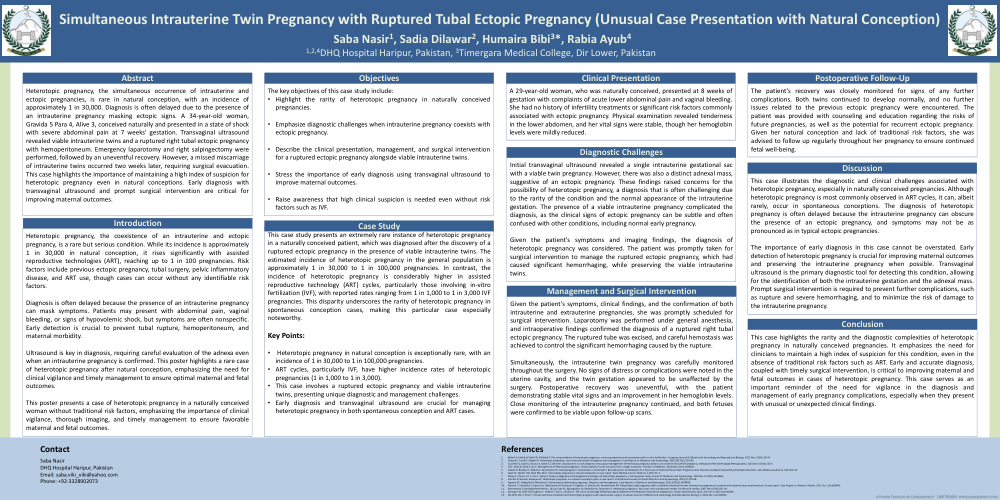
Title: Simultaneous Intrauterine Twin Pregnancy with Ruptured Tubal Ectopic Pregnancy (Unusual Case Presentation with Natural Conception)
Abstarct: Heterotopic pregnancy, the simultaneous occurrence of intrauterine and ectopic pregnancies, is rare in natural conception, with an incidence of approximately 1 in 30,000. Diagnosis is often delayed due to the presence of an intrauterine pregnancy masking ectopic signs. A 34-year-old woman, Gravida 5 Para 4, Alive 3, conceived naturally and presented in a state of shock with severe abdominal pain at 7 weeks' gestation. Transvaginal ultrasound revealed viable intrauterine twins and a ruptured right tubal ectopic pregnancy with hemoperitoneum. Emergency laparotomy and right salpingectomy were performed, followed by an uneventful recovery. However, a missed miscarriage of intrauterine twins occurred two weeks later, requiring surgical evacuation. This case highlights the importance of maintaining a high index of suspicion for heterotopic pregnancy even in natural conceptions. Early diagnosis with transvaginal ultrasound and prompt surgical intervention are critical for improving maternal outcomes.
Objectives: The key objectives of this case study include:
Conclusion: This case highlights the rarity and the diagnostic complexities of heterotopic pregnancy in naturally conceived pregnancies. It emphasizes the need for clinicians to maintain a high index of suspicion for this condition, even in the absence of traditional risk factors such as ART. Early and accurate diagnosis, coupled with timely surgical intervention, is critical to improving maternal and fetal outcomes in cases of heterotopic pregnancy. This case serves as an important reminder of the need for vigilance in the diagnosis and management of early pregnancy complications, especially when they present with unusual or unexpected clinical findings.