2,281 posters, 63 videos, 56 audios, 43 topics, 18 sessions, 6,174 authors, 2,323 institutions
ePostersLive by SciGen Technologies S.A. All rights reserved.
RCOG World Congress 2025
June 23 - 25, 2025 | ExCeL London, UK
PP.0058
Understanding preconception health needs in the Australian population – a retrospective population study
Poster Presenter
Authors
Joyce Xiao, Shruthi Patlori, Jacqueline Boyle, Penelope Sheehan, Asvini K Subasinghe
Affiliations
Part of Topic
Women's health & policies
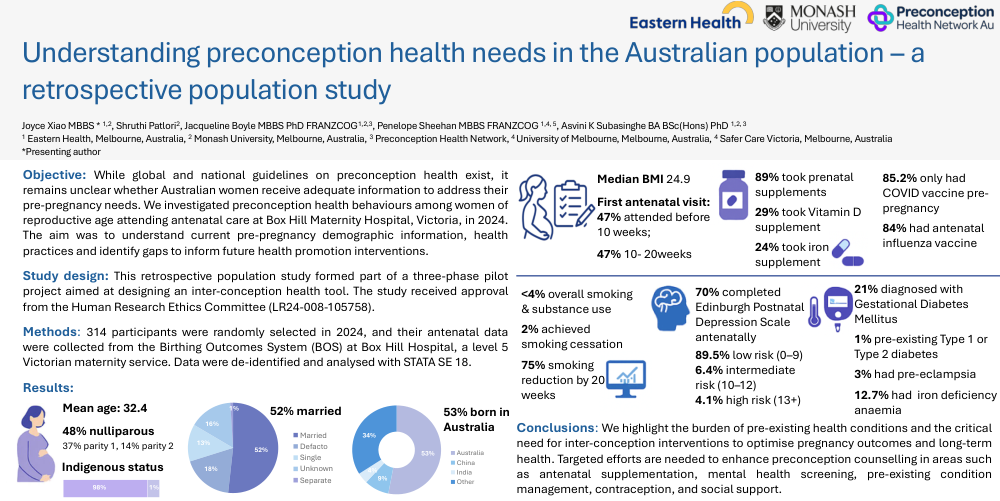
Understanding preconception health needs in the Australian population – a retrospective population study
Objective: While global and national guidelines on preconception health exist, it remains unclear whether Australian women receive adequate information to address their pre-pregnancy needs. We investigated preconception health behaviours among women of reproductive age attending antenatal care at Box Hill Maternity Hospital, Victoria, in 2024. The aim was to understand current pre-pregnancy demographic information, health practices and identify gaps to inform future health promotion interventions.
Study design: This retrospective population study formed part of a three-phase pilot project aimed at designing an inter-conception health tool. The study received approval from the Human Research Ethics Committee (LR24-008-105758).
Methods: A total of 314 participants were randomly selected in 2024, and their antenatal data were collected from the Birthing Outcomes System (BOS) at Box Hill Hospital, a level 5 Victorian maternity service. The de-identified data were analysed with STATA SE 18 to identify trends and needs.
Results: The mean age of participants was 32.4 years (SD 4.3). Among these women, 48% were nulliparous, 37% were parity 1, and 14% were parity 2. Nearly half (47%) had their first antenatal visit within 10 weeks of gestation, indicating timely primary care access. Of the participants, 52% were married, 18.5% were in de facto relationships, and 13.4% were single. Approximately 20% of women were born in South Asia and China, with 30% of migrants arriving in Australia before 2008. The median BMI was 24.9 (Q1-Q3: 22.2–29.4). Prenatal supplement use was high, with 89% (281/314) of women taking supplements, and around 25% also taking vitamin D and iron. Approximately 13% had iron deficiency anaemia. Smoking cessation during pregnancy was achieved by 2%, with a 75% reduction by 20 weeks’ gestation.
Mental health screening showed 70% completed the Edinburgh Postnatal Depression Scale antenatally, with 89.5% scoring low risk (0–9), 6.4% intermediate risk (10–12), and 4.1% high risk (13+). Around 30% reported a family history of diabetes or hypertension. Gestational diabetes mellitus was diagnosed in 21% (66/314), while 1% had pre-existing Type 1 or Type 2 diabetes (2/314).
Conclusions: We highlight the burden of pre-existing health conditions such as iron deficiency anaemia and the critical need for inter-conception interventions to optimise pregnancy outcomes and long-term health. Targeted efforts are needed to enhance preconception counselling in areas such as antenatal supplementation, mental health screening, pre-existing condition management, contraception, and social support. These measures may mitigate pregnancy complications and improve pregnancy planning.