2,281 posters, 63 videos, 56 audios, 43 topics, 18 sessions, 6,174 authors, 2,323 institutions
ePostersLive by SciGen Technologies S.A. All rights reserved.
RCOG World Congress 2025
June 23 - 25, 2025 | ExCeL London, UK
EP.0233
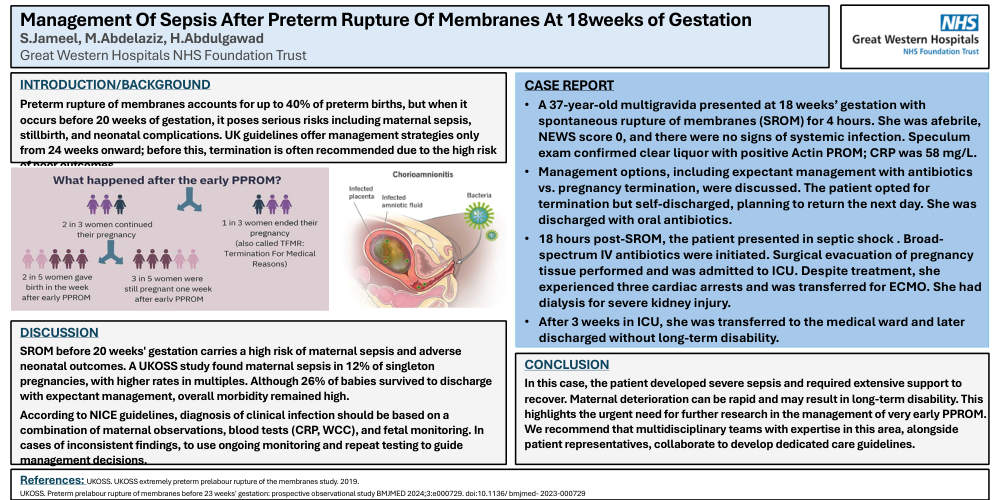
Management of Sepsis after Preterm Rupture of Membranes at 18weeks of Gestation
Poster Presenter
Authors
Affiliations
Part of Topic
Early pregnancy complications/early pregnancy and acute gynaecology
Management Of Sepsis After Preterm Rupture Of Membranes At 18weeks of Gestation
S.Jameel, M.Abdelaziz, H.Abdulgawad
Great Western Hospitals NHS Foundation Trust
INTRODUCTION/BACKGROUND
Preterm rupture of membranes accounts for up to 40% of preterm births, but when it occurs before 20 weeks of gestation, it poses serious risks including maternal sepsis, stillbirth, and neonatal complications. UK guidelines offer management strategies only from 24 weeks onward; before this, termination is often recommended due to the high risk of poor outcomes.
DISCUSSION
SROM before 20 weeks' gestation carries a high risk of maternal sepsis and adverse neonatal outcomes. A UKOSS study found maternal sepsis in 12% of singleton pregnancies, with higher rates in multiples. Although 26% of babies survived to discharge with expectant management, overall morbidity remained high.
According to NICE guidelines, diagnosis of clinical infection should be based on a combination of maternal observations, blood tests (CRP, WCC), and fetal monitoring. In cases of inconsistent findings, to use ongoing monitoring and repeat testing to guide management decisions
CASE REPORT
- A 37-year-old multigravida presented at 18 weeks’ gestation with spontaneous rupture of membranes (SROM) for 4 hours. She was afebrile, NEWS score 0, and there were no signs of systemic infection. Speculum exam confirmed clear liquor with positive Actin PROM; CRP was 58 mg/L.
- Management options, including expectant management with antibiotics vs. pregnancy termination, were discussed. The patient opted for termination but self-discharged, planning to return the next day. She was discharged with oral antibiotics.
- 18 hours post-SROM, the patient presented in septic shock . Broad-spectrum IV antibiotics were initiated. Surgical evacuation of pregnancy tissue performed and was admitted to ICU. Despite treatment, she experienced three cardiac arrests and was transferred for ECMO. She had dialysis for severe kidney injury.
- After 3 weeks in ICU, she was transferred to the medical ward and later discharged without long-term disability.
- CONCLUSION
- In this case, the patient developed severe sepsis and required extensive support to recover. Maternal deterioration can be rapid and may result in long-term disability. This highlights the urgent need for further research in the management of very early PPROM. We recommend that multidisciplinary teams with expertise in this area, alongside patient representatives, collaborate to develop dedicated care guidelines.