2,281 posters, 63 videos, 56 audios, 43 topics, 18 sessions, 6,174 authors, 2,323 institutions
ePostersLive by SciGen Technologies S.A. All rights reserved.
RCOG World Congress 2025
June 23 - 25, 2025 | ExCeL London, UK
PP.0057
"Optimizing Emergency Obstetric Care in Khyber Pakhtunkhwa, Pakistan: Bridging Gaps, Overcoming Barriers"
Poster Presenter
Part of Topic
Women's health & policies
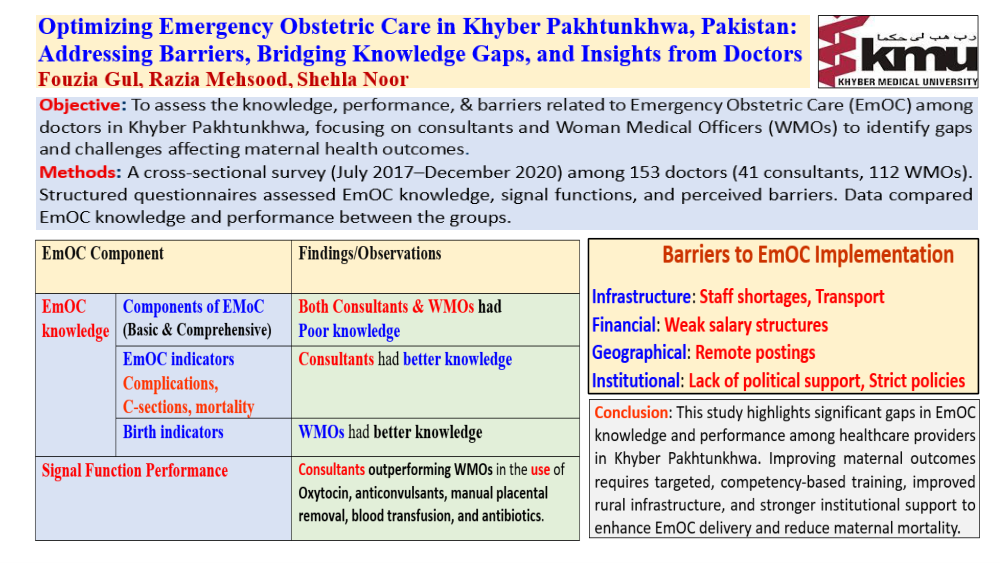
Optimizing Emergency Obstetric Care in Khyber Pakhtunkhwa, Pakistan: Addressing Barriers, Bridging Knowledge Gaps, and Insights from Doctors
Authors: Fouzia Gul, Razia Mehsood, Shehla Noor
Methods: This cross-sectional survey was conducted between July 2017 and December 2020 among 153 doctors (41 consultants and 112 WMOs) working in various healthcare facilities across the province. Data were collected using structured questionnaires assessing knowledge of EmOC indicators and signal functions, as well as perceived barriers to effective EmOC implementation. Comparative statistical analysis was performed to evaluate differences in knowledge and performance between the two groups.
Results: Significant disparities were observed in EmOC knowledge between consultants and WMOs. Consultants exhibited superior understanding of EmOC population indicators, obstetric complications, cesarean sections, and maternal mortality. In contrast, WMOs demonstrated better knowledge related to birth indicators. Consultants also outperformed WMOs in the execution of key signal functions, including the use of oxytocin, anticonvulsants, manual removal of the placenta, blood transfusions, and administration of antibiotics. Multiple barriers to effective EmOC implementation were identified. These included infrastructure-related issues such as staff shortages and limited transport facilities; financial constraints, including weak salary structures; geographical challenges, like remote placements; and institutional problems, such as lack of political support and restrictive policies.
Conclusion: This study highlights critical gaps in knowledge and performance related to EmOC among healthcare providers in Khyber Pakhtunkhwa. Addressing these disparities requires targeted, competency-based training for both consultants and WMOs. Simultaneously, improving healthcare infrastructure, mitigating resource deficits, and strengthening institutional support mechanisms are essential steps toward optimizing EmOC services and reducing maternal mortality in Pakistan.
Key Words: Emergency obstetric care (EmOC), Health care providers, Challenges, Barriers, Maternal mortality, Nurses, Lady Health Visitors, Lady Health Workers