2,281 posters, 63 videos, 56 audios, 43 topics, 18 sessions, 6,174 authors, 2,323 institutions
ePostersLive by SciGen Technologies S.A. All rights reserved.
RCOG World Congress 2025
June 23 - 25, 2025 | ExCeL London, UK
EP.2242
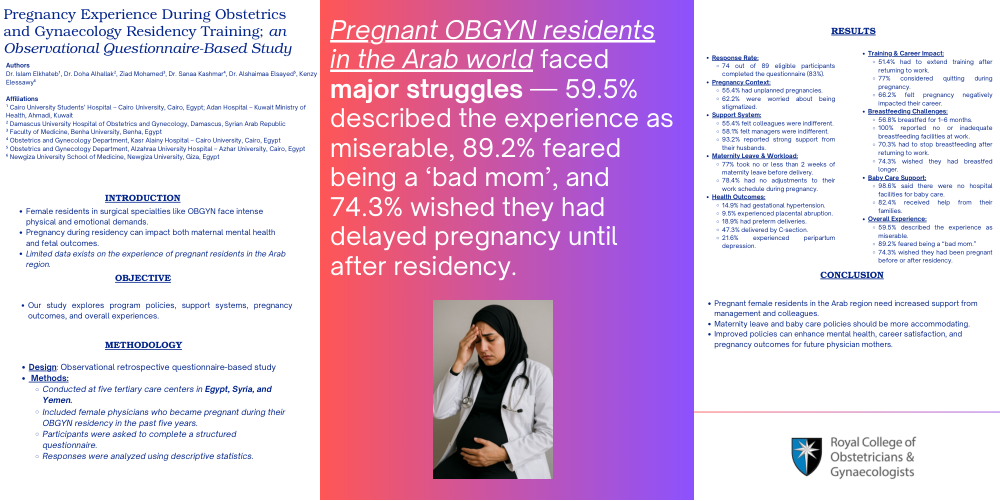
Pregnancy Experience During Obstetrics and Gynaecology Residency Training; an Observational Questionnaire-Based Study
Poster Presenter
Authors
Islam Elkhateb, Doha Alhallak, Ziad Mohamed, Sanaa Kashmar, Alshaimaa Elsayed, Kenzy Elessawy, Sajedah Mahdi
Affiliations
Cairo University Students' Hospital- Cairo University, Damascus University Hospital of Obstetrics and Gynecology, Benha University Faculty of Medicine, Obstetrics and Gynecology Department. Kasr Alainy Hospital- Cairo University, Obstetrics and Gynecology Department. Alzahraa University Hospital- Azhar University, Newgiza University School of Medicine- Newgiza University, The Educational Republican Hospital- Thamar University
Part of Topic
Women's health & policies
Pregnancy Experience During Obstetrics and Gynaecology Residency Training; an Observational Questionnaire-Based Study
Authors Dr. Islam Elkhateb¹, Dr. Doha Alhallak², Ziad Mohamed³, Dr. Sanaa Kashmar⁴, Dr. Alshaimaa Elsayed⁵, Kenzy Elessawy⁶
Affiliations ¹ Cairo University Students’ Hospital – Cairo University, Cairo, Egypt; Adan Hospital – Kuwait Ministry of Health, Ahmadi, Kuwait ² Damascus University Hospital of Obstetrics and Gynecology, Damascus, Syrian Arab Republic ³ Faculty of Medicine, Benha University, Benha, Egypt ⁴ Obstetrics and Gynecology Department, Kasr Alainy Hospital – Cairo University, Cairo, Egypt ⁵ Obstetrics and Gynecology Department, Alzahraa University Hospital – Azhar University, Cairo, Egypt ⁶ Newgiza University School of Medicine, Newgiza University, Giza, Egypt
INTRODUCTION
Female residents in surgical specialties like OBGYN face intense physical and emotional demands. Pregnancy during residency can impact both maternal mental health and fetal outcomes. Limited data exists on the experience of pregnant residents in the Arab region.
OBJECTIVE
Our study explores program policies, support systems, pregnancy outcomes, and overall experiences.
METHODOLOGY
Design: Observational retrospective questionnaire-based study Methods:
Conducted at five tertiary care centers in Egypt, Syria, and
Yemen.
Included female physicians who became pregnant during their
OBGYN residency in the past five years.
Participants were asked to complete a structured
questionnaire.
Responses were analyzed using descriptive statistics.
Pregnant OBGYN residents in the Arab world faced major struggles — 59.5% described the experience as miserable, 89.2% feared being a ‘bad mom’, and 74.3% wished they had delayed pregnancy until after residency.
RESULTS
Response Rate:
74 out of 89 eligible participants
completed the questionnaire (83%).
Pregnancy Context:
55.4% had unplanned pregnancies.
62.2% were worried about being
stigmatized.
Support System:
55.4% felt colleagues were indifferent.
58.1% felt managers were indifferent.
93.2% reported strong support from
their husbands.
Maternity Leave & Workload:
77% took no or less than 2 weeks of
maternity leave before delivery.
78.4% had no adjustments to their
work schedule during pregnancy.
Health Outcomes:
14.9% had gestational hypertension.
9.5% experienced placental abruption.
18.9% had preterm deliveries.
47.3% delivered by C-section.
21.6% experienced peripartum
depression.
Training & Career Impact:
51.4% had to extend training after
returning to work.
77% considered quitting during
pregnancy.
66.2% felt pregnancy negatively
impacted their career.
Breastfeeding Challenges:
56.8% breastfed for 1–6 months.
100% reported no or inadequate
breastfeeding facilities at work.
70.3% had to stop breastfeeding after
returning to work.
74.3% wished they had breastfed
longer.
Baby Care Support:
98.6% said there were no hospital
facilities for baby care.
82.4% received help from their
families.
Overall Experience:
59.5% described the experience as
miserable.
89.2% feared being a “bad mom.”
74.3% wished they had been pregnant
before or after residency.
CONCLUSION
Pregnant female residents in the Arab region need increased support from management and colleagues. Maternity leave and baby care policies should be more accommodating. Improved policies can enhance mental health, career satisfaction, and pregnancy outcomes for future physician mothers.