2,281 posters, 63 videos, 56 audios, 43 topics, 18 sessions, 6,174 authors, 2,323 institutions
ePostersLive by SciGen Technologies S.A. All rights reserved.
RCOG World Congress 2025
June 23 - 25, 2025 | ExCeL London, UK
EP.2152
The invisible Threat - Women’s knowledge and concerns about Air Pollution during pregnancy.
Poster Presenter
Authors
Affiliations
Part of Topic
Sustainability and climate change
Audio
The invisible threat: Women’s knowledge and concerns about air pollution during pregnancy
Background
Air pollution is the leading environmental threat to health.
It is linked to asthma and stroke, as well as adverse maternal and fetal outcomes such as like low birth weight, preterm birth, and maternal depression.
Racial inequalities in exposure to air pollution mean that Black communities in London face higher exposure to harmful air pollutants, putting Black mothers and pregnant women at greater risk.
Yet, little is known about how Black mothers feel about air pollution or how it shapes their behaviours - despite them being among the most exposed to harmful pollutants.
Objectives
To explore the awareness, attitudes, and behaviours of Black mothers’ and Black pregnant women living in London towards air pollution across three domains: (a) personal health, (b) health during pregnancy, and (c) the health of a baby in the womb.
To identify gaps in understanding that can inform policy and health interventions.
Methods
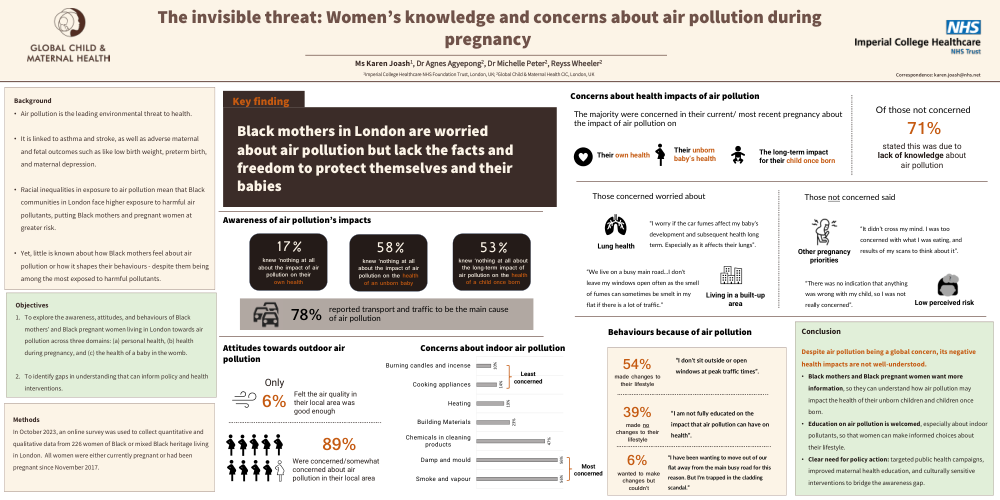
In October 2023, an online survey was used to collect quantitative and qualitative data from 226 women of Black or mixed Black heritage living in London. All women were either currently pregnant or had been pregnant since November 2017.
Findings:
Awareness was higher for personal health than for unborn or newborn children.
Some were not concerned, citing limited knowledge, low perceived risk, or other pregnancy-related priorities.
Most recognized traffic as a major pollutant and expressed concern about indoor pollutants like damp, mould, and cleaning chemicals.
The majority of women were concerned about air pollution, but a quarter were not. Among those who were not concerned, 71% stated that this was due to a lack of knowledge about air pollution.
Gas cooking appliances were not widely seen as a concern, despite evidence of harm.
Many had made lifestyle changes (e.g. avoiding traffic, using eco-friendly products), while others wanted to but couldn’t—often due to systemic barriers like lack of housing choice.
Conclusion:
Despite air pollution being a global concern, its negative health impacts are not well-understood.
Black mothers and Black pregnant women want more information, so they can understand how air pollution may impact the health of their unborn children and children once born.
Education on air pollution is welcomed, especially about indoor pollutants, so that women can make informed choices about their lifestyle.
Clear need for policy action: targeted public health campaigns, improved maternal health education, and culturally