2,281 posters, 63 videos, 56 audios, 43 topics, 18 sessions, 6,174 authors, 2,323 institutions
ePostersLive by SciGen Technologies S.A. All rights reserved.
RCOG World Congress 2025
June 23 - 25, 2025 | ExCeL London, UK
EP.0212
A rare case of uterine AV malformation following first trimester miscarriage
Poster Presenter
Authors
Atif Fazari, Jancy Ali, Asma Fahad, Fareeda Nikhat, Afra Ghayoor, Razan Adil
Affiliations
Part of Topic
Early pregnancy complications/early pregnancy and acute gynaecology
Objective:
To highlight the diagnostic challenges in differentiating uterine arteriovenous malformation (AVM) from retained products of conception (RPOC).
• To discuss the possibility and prognosis of the development of a secondary AVM following a miscarriage
• To describe the multidisciplinary approach in the management of uterine AVM.
Case Report:
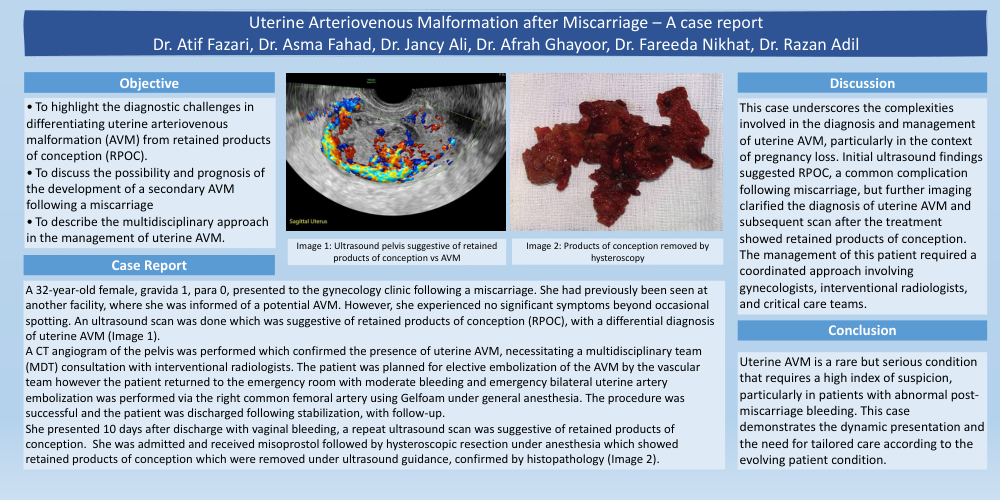
A 32-year-old female, gravida 1, para 0, presented to the gynecology clinic following a miscarriage. She had previously been seen at another facility, where she was informed of a potential AVM. However, she experienced no significant symptoms beyond occasional spotting. An ultrasound scan was done which was suggestive of retained products of conception (RPOC), with a differential diagnosis of uterine AVM (Image 1).
A CT angiogram of the pelvis was performed which confirmed the presence of uterine AVM, necessitating a multidisciplinary team (MDT) consultation with interventional radiologists. The patient was planned for elective embolization of the AVM by the vascular team however the patient returned to the emergency room with moderate bleeding and emergency bilateral uterine artery embolization was performed via the right common femoral artery using Gelfoam under general anesthesia. The procedure was successful and the patient was discharged following stabilization, with follow-up.
She presented 10 days after discharge with vaginal bleeding, a repeat ultrasound scan was suggestive of retained products of conception. She was admitted and received misoprostol followed by hysteroscopic resection under anesthesia which showed retained products of conception which were removed under ultrasound guidance, confirmed by histopathology (Image 2).
Discussion:
This case underscores the complexities involved in the diagnosis and management of uterine AVM, particularly in the context of pregnancy loss. Initial ultrasound findings suggested RPOC, a common complication following miscarriage, but further imaging clarified the diagnosis of uterine AVM and subsequent scan after the treatment showed retained products of conception. The management of this patient required a coordinated approach involving gynecologists, interventional radiologists, and critical care teams.
Conclusion:
Uterine AVM is a rare but serious condition that requires a high index of suspicion, particularly in patients with abnormal post-miscarriage bleeding. This case demonstrates the dynamic presentation and the need for tailored care according to the evolving patient condition.