2,281 posters, 63 videos, 56 audios, 43 topics, 18 sessions, 6,174 authors, 2,323 institutions
ePostersLive by SciGen Technologies S.A. All rights reserved.
RCOG World Congress 2025
June 23 - 25, 2025 | ExCeL London, UK
EP.2119
Impact of Gynecologic Cancer on Sexual Dysfunction in Women
Poster Presenter
Authors
Nesrine Souayeh, Haitem Aloui, Marwa Moussi, Hadhami Rouis, Smida Hana, Chaouki Mbarki, Hajer Bettaieb
Affiliations
Ben Arous Regional Hospital, Deprtment of gynecology and Obstetrics, Department of Gynecology and Obstetrics of Tunis Maternity and Neonatology Center, Ben Arous regional hospital, gynecology and obstetrics department, university on Tunis elmanar, faculty of medicine, Ben Arous, Ben Arous regional hospital, gynecology and obstetrics department,universityof Tunis elmanar, faculty of medicine, Ben Arous regional hospital, gynecology and obstetrics department, university of Tunis elmanar, faculty of medecine
Part of Topic
Sexual & reproductive health
Impact of Gynecologic Cancer on Sexual Dysfunction in Women
Nesrine souayeh, Haithem Aloui, Moussi Marwa, Hadhami Rouis, Smida Hana, Chaouki Mbarki, Hajer Bettaieb
Introduction
Sexual dysfunction is a common consequence of gynecologic cancer treatments. It can result from hormonal changes, psychological factors, or surgical interventions. This impairment in sexual function profoundly impacts women's quality of life, affecting their emotional well-being and intimate relationships. Despite its significant impact, this issue is often underestimated and inadequately addressed in patient care.
Objective :
The objective of this study was to examine the impact of gynecologic cancer treatments on women's sexuality, highlighting the changes that occur after these critical stages.
Design:
A cross-sectional study was conducted using a questionnaire.
Method:
Sexual dysfunction was assessed by the change in the Female Sexual Function Index score, while marital dysfunction was measured by comparing the variations in the Intimate Bond Measure between the period before diagnosis and after treatment. Differences between women with and without dysfunction were analyzed using paired t-tests and Fisher's exact test.
Results:
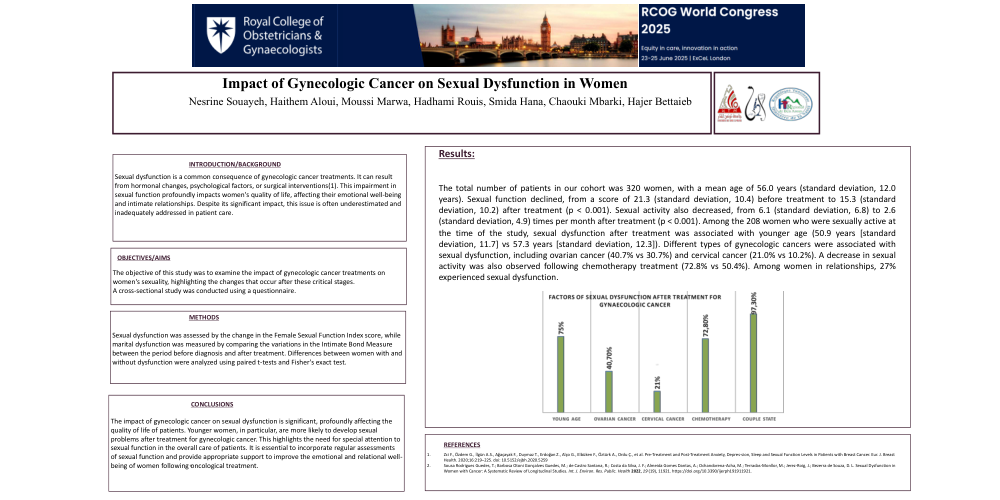
The total number of patients in our cohort was 320 women, with a mean age of 56.0 years (standard deviation, 12.0 years). Sexual function declined, from a score of 21.3 (standard deviation, 10.4) before treatment to 15.3 (standard deviation, 10.2) after treatment (p < 0.001). Sexual activity also decreased, from 6.1 (standard deviation, 6.8) to 2.6 (standard deviation, 4.9) times per month after treatment (p < 0.001). Among the 208 women who were sexually active at the time of the study, sexual dysfunction after treatment was associated with younger age (50.9 years [standard deviation, 11.7] vs 57.3 years [standard deviation, 12.3]). Different types of gynecologic cancers were associated with sexual dysfunction, including ovarian cancer (40.7% vs 30.7%) and cervical cancer (21.0% vs 10.2%). A decrease in sexual activity was also observed following chemotherapy treatment (72.8% vs 50.4%). Among women in relationships, 27% experienced sexual dysfunction.
Conclusions:
The impact of gynecologic cancer on sexual dysfunction is significant, profoundly affecting the quality of life of patients. Younger women, in particular, are more likely to develop sexual problems after treatment for gynecologic cancer. This highlights the need for special attention to sexual function in the overall care of patients. It is essential to incorporate regular assessments of sexual function and provide appropriate support to improve the emotional and relational well-being of women following oncological treatment.