2,281 posters, 63 videos, 56 audios, 43 topics, 18 sessions, 6,174 authors, 2,323 institutions
ePostersLive by SciGen Technologies S.A. All rights reserved.
RCOG World Congress 2025
June 23 - 25, 2025 | ExCeL London, UK
EP.2106
The Effectiveness of Emergency Contraception: Current Evidence and Future Directions
Poster Presenter
Part of Topic
Sexual & reproductive health
Emergency Contraception: Current Evidence and FUTURE DIRECTION
From Evidence To Action : Enhancing Emergency Contraception for Global Health Equity
Author: Dr Maniza Khan, Specialist, Asgar Ali Hospital, June 2025
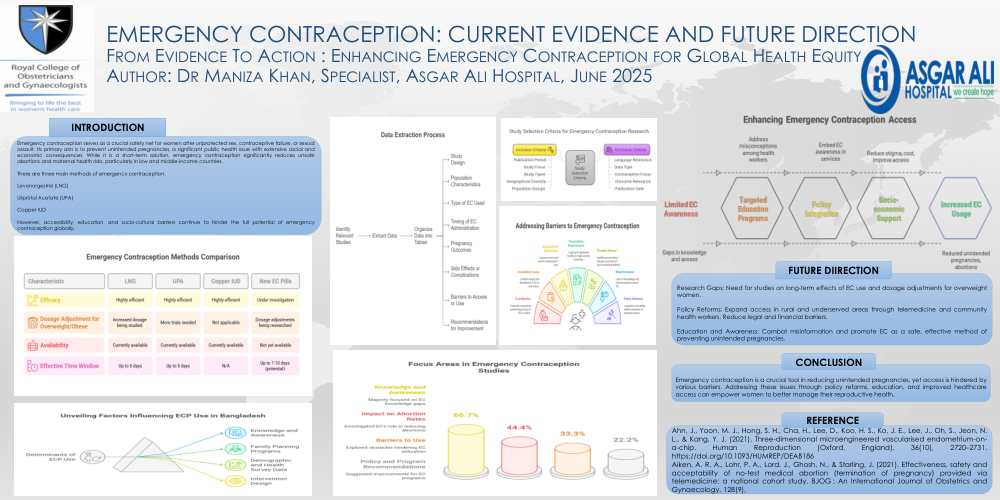
Emergency contraception serves as a crucial safety net for women after unprotected sex, contraceptive failure, or sexual assault. Its primary aim is to prevent unintended pregnancies, a significant public health issue with extensive social and economic consequences. While it is a short-term solution, emergency contraception significantly reduces unsafe abortions and maternal health risks, particularly in low and middle-income countries.
There are three main methods of emergency contraception:
Levonorgestrel (LNG)
Ulipristal Acetate (UPA)
Copper IUD
However, accessibility, education, and socio-cultural barriers continue to hinder the full potential of emergency contraception globally.
Future Direction
Research Gaps: Need for studies on long-term effects of EC use and dosage adjustments for overweight women.
Policy Reforms: Expand access in rural and underserved areas through telemedicine and community health workers. Reduce legal and financial barriers.
Education and Awareness: Combat misinformation and promote EC as a safe, effective method of preventing unintended pregnancies.
Conclusion:
Emergency contraception is a crucial tool in reducing unintended pregnancies, yet access is hindered by various barriers. Addressing these issues through policy reforms, education, and improved healthcare access can empower women to better manage their reproductive health.