2,281 posters, 63 videos, 56 audios, 43 topics, 18 sessions, 6,174 authors, 2,323 institutions
ePostersLive by SciGen Technologies S.A. All rights reserved.
RCOG World Congress 2025
June 23 - 25, 2025 | ExCeL London, UK
EP.1994
Proposed Scoring System for PCOS Diagnosis and Management
Poster Presenter
Authors
Affiliations
Part of Topic
Reproductive medicine/assisted reproduction
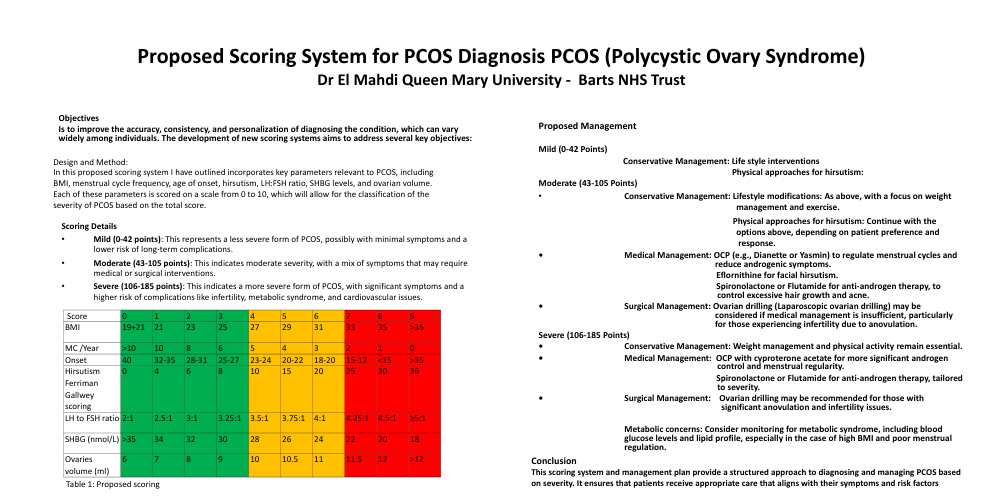
Proposed Scoring System for PCOS Diagnosis PCOS (Polycystic Ovary Syndrome)
Objectives
Is to improve the accuracy, consistency, and personalization of diagnosing the condition, which can vary widely among individuals. The development of new scoring systems aims to address several key objectives:
Design and Method:
In this proposed scoring system I have outlined incorporates key parameters relevant to PCOS, including BMI, menstrual cycle frequency, age of onset, hirsutism, LH:FSH ratio, SHBG levels, and ovarian volume. Each of these parameters is scored on a scale from 0 to 10, which will allow for the classification of the severity of PCOS based on the total score.
Scoring Details
Proposed Management
Mild (0-42 Points)
Conservative Management: Life style interventions
Physical approaches for hirsutism:
Moderate (43-105 Points)
• Medical Management: OCP (e.g., Dianette or Yasmin) to regulate menstrual cycles and reduce androgenic symptoms.
Eflornithine for facial hirsutism.
Spironolactone or Flutamide for anti-androgen therapy, to control excessive hair growth and acne.
• Surgical Management: Ovarian drilling (Laparoscopic ovarian drilling) may be considered if medical management is insufficient, particularly for those experiencing infertility due to anovulation.
Severe (106-185 Points)
• Conservative Management: Weight management and physical activity remain essential.
• Medical Management: OCP with cyproterone acetate for more significant androgen control and menstrual regularity.
Spironolactone or Flutamide for anti-androgen therapy, tailored to severity.
• Surgical Management: Ovarian drilling may be recommended for those with significant anovulation and infertility issues.
Metabolic concerns: Consider monitoring for metabolic syndrome, including blood glucose levels and lipid profile, especially in the case of high BMI and poor menstrual regulation.
Conclusion
This scoring system and management plan provide a structured approach to diagnosing and managing PCOS based on severity. It ensures that patients receive appropriate care that aligns with their symptoms and risk factors