2,281 posters, 63 videos, 56 audios, 43 topics, 18 sessions, 6,174 authors, 2,323 institutions
ePostersLive by SciGen Technologies S.A. All rights reserved.
RCOG World Congress 2025
June 23 - 25, 2025 | ExCeL London, UK
EP.1988
Audit on Diagnosis, Referral, and Pregnancy Outcomes of Polycystic Ovarian Syndrome patients
Poster Presenter
Part of Topic
Reproductive medicine/assisted reproduction
Audit on Diagnosis, Referral, and Pregnancy Outcomes of Polycystic Ovarian Syndrome patients
Polycystic Ovarian Syndrome (PCOS) is a common endocrine disorder associated with an increased risk of metabolic complications and adverse pregnancy outcomes, such as miscarriage, gestational diabetes mellitus (GDM), hypertension, pre-eclampsia, induction of labour, and caesarean section. Despite its prevalence, PCOS is frequently underdiagnosed, leading to delays in treatment. This results in avoidable fertility challenges, significant emotional distress, and an elevated risk of long-term metabolic complications.
Incomplete referrals from general practitioners (GPs) to secondary care exacerbate these challenges, causing unnecessary repeat appointments, inefficiencies in NHS resources, and heightened patient emotional burden. These issues underscore the importance of improving referral processes to enhance patient outcomes and reduce costs. Additionally, during antenatal care, delivery, and the puerperium, PCOS is often overlooked as a clinical concern, receiving insufficient attention from both patients and healthcare professionals due to limited awareness of its impact on pregnancy outcomes.
This audit aimed to assess whether the current departmental referral processes and management practices align with NICE and ESHRE guidelines, identify gaps in practice, and recommend improvements.
Objectives
To evaluate the quality of GP referrals to the fertility clinic and assess pregnancy outcomes among patients with PCOS
Methodology
A retrospective audit was conducted on patients attending the fertility clinic at Basildon University Hospital between October 2021 and October 2023. Data were extracted from patient records, spanning preconception, pregnancy, and delivery, and analysed using Microsoft Excel.
Results
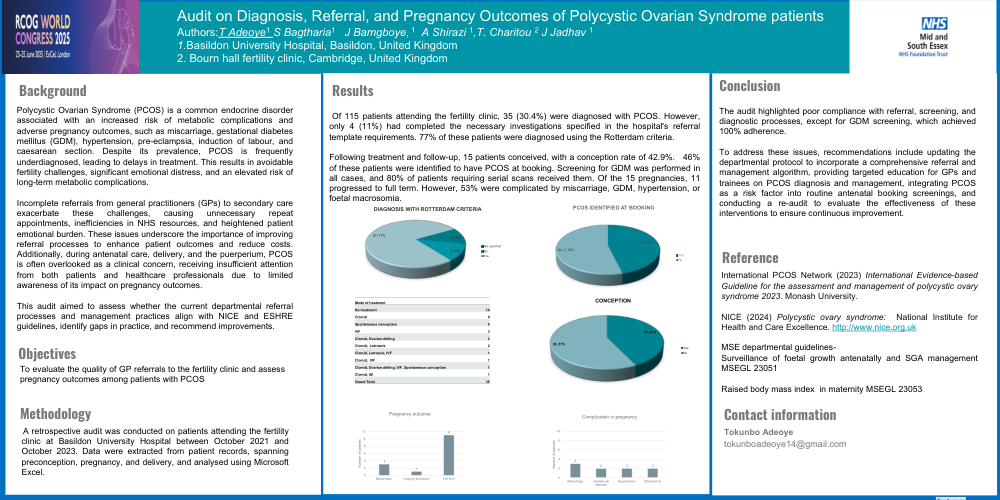
Of 115 patients attending the fertility clinic, 35 (30.4%) were diagnosed with PCOS. However, only 4 (11%) had completed the necessary investigations specified in the hospital's referral template requirements. 77% of these patients were diagnosed using the Rotterdam criteria.
Following treatment and follow-up, 15 patients conceived, with a conception rate of 42.9%. 46% of these patients were identified to have PCOS at booking. Screening for GDM was performed in all cases, and 80% of patients requiring serial scans received them. Of the 15 pregnancies, 11 progressed to full term. However, 53% were complicated by miscarriage, GDM, hypertension, or foetal macrosomia.
Conclusion
The audit highlighted poor compliance with referral, screening, and diagnostic processes, except for GDM screening, which achieved 100% adherence. To address these issues, recommendations include updating the departmental protocol to incorporate a comprehensive referral and management algorithm, providing targeted education for GPs and trainees on PCOS diagnosis and management, integrating PCOS as a risk factor into routine antenatal booking screenings, and conducting a re-audit to evaluate the effectiveness of these interventions to ensure continuous improvement.