2,281 posters, 63 videos, 56 audios, 43 topics, 18 sessions, 6,174 authors, 2,323 institutions
ePostersLive by SciGen Technologies S.A. All rights reserved.
RCOG World Congress 2025
June 23 - 25, 2025 | ExCeL London, UK
EP.0144
Optimising Hyperemesis Gravidarum Management with Ambulatory Care Services: A Quality Improvement Project
Poster Presenter
Authors
Affiliations
Part of Topic
Early pregnancy complications/early pregnancy and acute gynaecology
Optimising Hyperemesis Gravidarum Management with Ambulatory Care Services: A Quality Improvement Project
Dr Georgina Freegard 1, Dr Sarah Channing1
1 St Michael’s Hospital, University Hospitals Bristol and Weston NHS Foundation Trust
Objective
Hyperemesis Gravidarum (HG), the extreme form of nausea and vomiting in pregnancy, is thought to affect up to 3.6% of pregnant women (1). It is associated with maternal and fetal morbidity, including weight loss, nutritional deficiencies, fetal growth restriction, as well as a significant reduction in patient’s quality of life (2).
At our tertiary teaching hospital, the acute gynaecology service has experienced increased acuity with frequent re-admissions and overnight stays for HG. Outpatient management of HG has been shown to be safe, cost-effective and associated with higher patient satisfaction (1).
Our aims were:
Design
We undertook an audit as part of a quality improvement project to assess admission numbers and length of stay for hyperemesis on our acute gynaecology ward before and after reintroducing ambulatory HG care.
Method
Retrospective data were collected for all HG admissions under the acute gynaecology take within specified audit periods.
Results
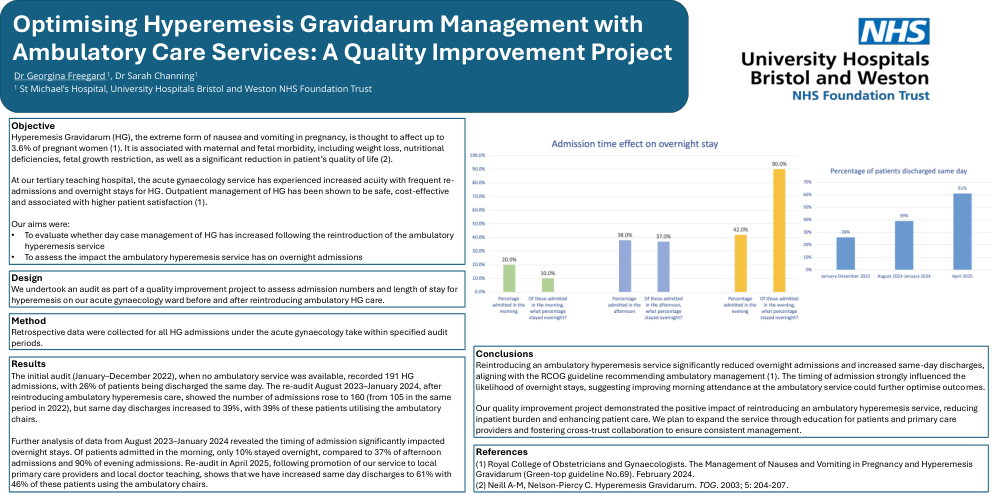
The initial audit (January–December 2022), when no ambulatory service was available, recorded 191 HG admissions, with 26% of patients being discharged the same day. The re-audit August 2023–January 2024, after reintroducing ambulatory hyperemesis care, showed the number of admissions rose to 160 (from 105 in the same period in 2022), but same day discharges increased to 39%, with 39% of these patients utilising the ambulatory chairs.
Further analysis of data from August 2023–January 2024 revealed the timing of admission significantly impacted overnight stays. Of patients admitted in the morning, only 10% stayed overnight, compared to 37% of afternoon admissions and 90% of evening admissions. Re-audit in April 2025, following promotion of our service to local primary care providers and local doctor teaching, shows that we have increased same day discharges to 61% with 46% of these patients using the ambulatory chairs.
Conclusions
Reintroducing an ambulatory hyperemesis service significantly reduced overnight admissions and increased same-day discharges, aligning with the RCOG guideline recommending ambulatory management (1). The timing of admission strongly influenced the likelihood of overnight stays, suggesting improving morning attendance at the ambulatory service could further optimise outcomes.
Our quality improvement project demonstrated the positive impact of reintroducing an ambulatory hyperemesis service, reducing inpatient burden and enhancing patient care. We plan to expand the service through education for patients and primary care providers and fostering cross-trust collaboration to ensure consistent management.
References
(1) Royal College of Obstetricians and Gynaecologists. The Management of Nausea and Vomiting in Pregnancy and Hyperemesis Gravidarum (Green-top guideline No.69). February 2024.
(2) Neill A-M, Nelson-Piercy C. Hyperemesis Gravidarum. TOG. 2003; 5: 204-207.