2,281 posters, 63 videos, 56 audios, 43 topics, 18 sessions, 6,174 authors, 2,323 institutions
ePostersLive by SciGen Technologies S.A. All rights reserved.
RCOG World Congress 2025
June 23 - 25, 2025 | ExCeL London, UK
EP.1258
Rethinking Ethnicity-Based Growth Scans: Do They Address Disparities in Perinatal Outcomes?
Poster Presenter
Part of Topic
Hot topics (emerging research/issues) in obstetrics
Rethinking Ethnicity-Based Growth Scans: Do They Address Disparities in Perinatal Outcomes?
A Mixed Methods Study
Introduction
Ethnic inequalities in maternal and perinatal outcomes, such as stillbirth, are well established, with Black babies facing over double the stillbirth rates of White babies (1). Despite a 20% reduction in overall stillbirth rates from initiatives like NHS England’s Saving Babies Lives care bundle, disparities persist (2).
This study examines whether additional third-trimester growth scans for low-risk Black and Asian (BA) women:
Methods
This 12-month retrospective cohort study at a single UK tertiary maternity centre evaluated outcomes of additional third-trimester growth scans for low-risk BA women from April 2022 to April 2023.
Quantitative component:
Data on birth outcomes were collected from BA women (n=1,582) during the intervention year, with 260 classified as low-risk and receiving additional scans. Women with comorbidities were excluded. Outcomes were compared to a matched historical control group (n=1,791) from the previous year. Statistical analysis was performed using IBM SPSS Statistics v26.
Qualitative component
A survey distributed postnatally assessed acceptability of the intervention (n=47). Responses were analysed using thematic analysis.
Results
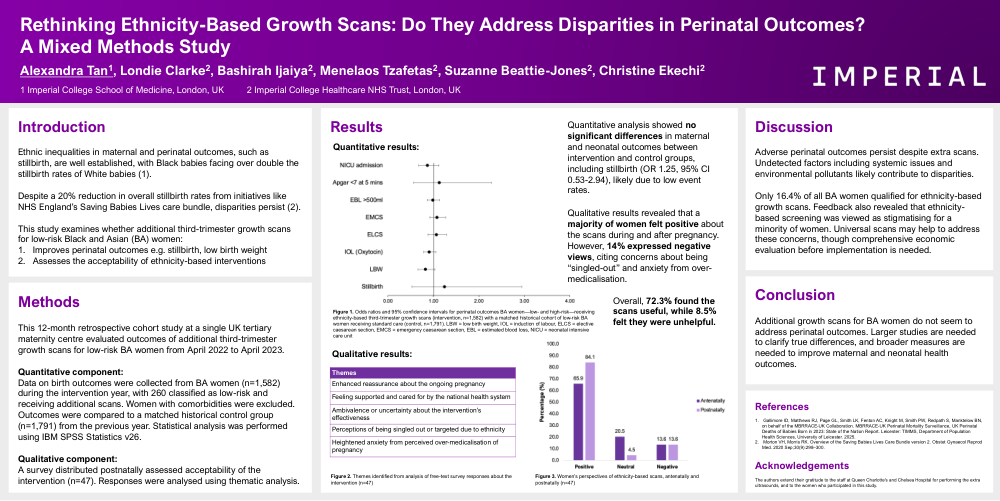
Quantitative analysis showed no significant differences in maternal and neonatal outcomes between intervention and control groups, including stillbirth (OR 1.25, 95% CI 0.53-2.94), likely due to low event rates.
Qualitative results revealed that a majority of women felt positive about the scans during and after pregnancy. However, 14% expressed negative views, citing concerns about being “singled-out” and anxiety from over-medicalisation.
Overall, 72.3% found the scans useful, while 8.5% felt they were unhelpful.
Discussion
Adverse perinatal outcomes persist despite extra scans. Undetected factors including systemic issues and environmental pollutants likely contribute to disparities.
Only 16.4% of all BA women qualified for ethnicity-based growth scans. Feedback also revealed that ethnicity-based screening was viewed as stigmatising for a minority of women. Universal scans may help to address these concerns, though comprehensive economic evaluation before implementation is needed.
Conclusion
Additional growth scans for BA women do not seem to address perinatal outcomes. Larger studies are needed to clarify true differences, and broader measures are needed to improve maternal and neonatal health outcomes.
References
Acknowledgements
The authors extend their gratitude to the staff at Queen Charlotte’s and Chelsea Hospital for performing the extra ultrasounds, and to the women who participated in this study.