2,281 posters, 63 videos, 56 audios, 43 topics, 18 sessions, 6,174 authors, 2,323 institutions
ePostersLive by SciGen Technologies S.A. All rights reserved.
RCOG World Congress 2025
June 23 - 25, 2025 | ExCeL London, UK
EP.1251
Noise levels in obstetric theatres – Is it really that loud?
Poster Presenter
Authors
Affiliations
Part of Topic
Hot topics (emerging research/issues) in obstetrics
Noise levels in obstetric theatres – Is it really that loud?
S.J. Mason 1,2 and S. Marriott 2
1 Department of Obstetrics & Gynaecology, NHS Tayside, Scotland, United Kingdom
2 School of Medicine, University of Dundee, Scotland, United Kingdom
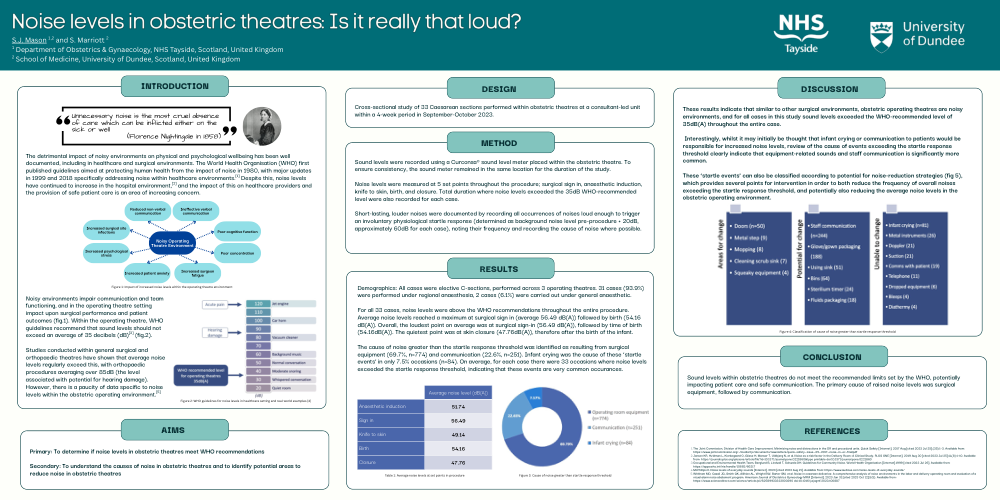
Objective: Noisy environments present a challenge for communication, and noise in the operating theatre can impact on attention, surgical performance, and team functioning. As a result, the World Health Organisation (WHO) has published recommendations for acceptable levels of background noise in operating theatres. Obstetric theatres are unique in both the presence of potential sources of noise, and the frequency at which emergencies requiring clear communication occur. The aim of this study was to determine if noise levels within obstetric theatres meet WHO recommendations, with a secondary aim of understanding the source of any increased noise to provide potential targets for noise-reduction strategies within obstetric theatres.
Design: Cross-sectional study of 33 Caesarean sections performed within obstetric theatres at a consultant-led unit within a 4-week period in September-October 2023.
Method: Sound levels were recorded using a Curconsa® sound level meter placed within the obstetric theatre. Noise levels were then measured at set points throughout the procedure, including surgical sign in, anaesthetic induction, knife to skin, birth, and closure. The duration where noise levels exceeded that recommended by WHO were also recorded. Finally, any noise reaching a level high enough to cause a physiological startle response was recorded and the cause of this identified. To ensure consistency, sound levels were measured from the same location within the theatres throughout.
Results: For all 33 cases, the noise level throughout the entire procedure was above WHO recommendations. Average noise levels reached a maximum at surgical sign in (average 56.49 dB(A)) followed by birth (54.16 dB(A)). The cause of noise greater than the startle response threshold was identified as resulting from surgical equipment (69.7%, n=774) and communication (22.6%, n=251).
Conclusion: Sound levels within obstetric theatres do not meet the recommended limits set by the WHO, potentially impacting patient care and safe communication. The primary cause of raised noise levels was surgical equipment, followed by communication.