2,281 posters, 63 videos, 56 audios, 43 topics, 18 sessions, 6,174 authors, 2,323 institutions
ePostersLive by SciGen Technologies S.A. All rights reserved.
RCOG World Congress 2025
June 23 - 25, 2025 | ExCeL London, UK
EP.1133
Does Size Matter? Conservative Management of a Large Placental Chorangioma
Poster Presenter
Authors
Affiliations
Part of Topic
High risk pregnancy
Objective
This case outlines the conservative management approach for a giant placental chorangioma.
Case Report
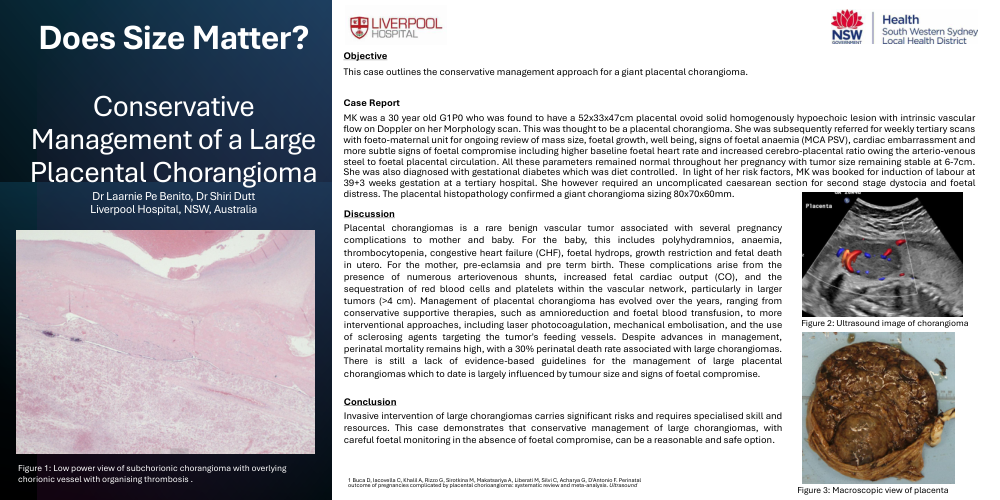
MK was a 30 year old G1P0 who was found to have a 52x33x47cm placental ovoid solid homogenously hypoechoic lesion with intrinsic vascular flow on Doppler on her Morphology scan. This was thought to be a placental chorangioma. She was subsequently referred for weekly tertiary scans with foeto-maternal unit for ongoing review of mass size, foetal growth, well being, signs of foetal anaemia (MCA PSV), cardiac embarrassment and more subtle signs of foetal compromise including higher baseline foetal heart rate and increased cerebro-placental ratio owing the arterio-venous steel to foetal placental circulation. All these parameters remained normal throughout her pregnancy with tumor size remaining stable at 6-7cm. She was also diagnosed with gestational diabetes which was diet controlled. In light of her risk factors, MK was booked for induction of labour at 39+3 weeks gestation at a tertiary hospital. She however required an uncomplicated caesarean section for second stage dystocia and foetal distress. The placental histopathology confirmed a giant chorangioma sizing 80x70x60mm.
Discussion
Placental chorangiomas is a rare benign vascular tumor associated with several pregnancy complications to mother and baby. For the baby, this includes polyhydramnios, anaemia, thrombocytopenia, congestive heart failure (CHF), foetal hydrops, growth restriction and fetal death in utero. For the mother, pre-eclamsia and pre term birth. These complications arise from the presence of numerous arteriovenous shunts, increased fetal cardiac output (CO), and the sequestration of red blood cells and platelets within the vascular network, particularly in larger tumors (>4 cm). Management of placental chorangioma has evolved over the years, ranging from conservative supportive therapies, such as amnioreduction and foetal blood transfusion, to more interventional approaches, including laser photocoagulation, mechanical embolisation, and the use of sclerosing agents targeting the tumor's feeding vessels. Despite advances in management, perinatal mortality remains high, with a 30% perinatal death rate associated with large chorangiomas. There is still a lack of evidence-based guidelines for the management of large placental chorangiomas which to date is largely influenced by tumour size and signs of foetal compromise.
Conclusion
Invasive intervention of large chorangiomas carries significant risks and requires specialised skill and resources. This case demonstrates that conservative management of large chorangiomas, with careful foetal monitoring in the absence of foetal compromise, can be a reasonable and safe option.