2,281 posters, 63 videos, 56 audios, 43 topics, 18 sessions, 6,174 authors, 2,323 institutions
ePostersLive by SciGen Technologies S.A. All rights reserved.
RCOG World Congress 2025
June 23 - 25, 2025 | ExCeL London, UK
EP.1129
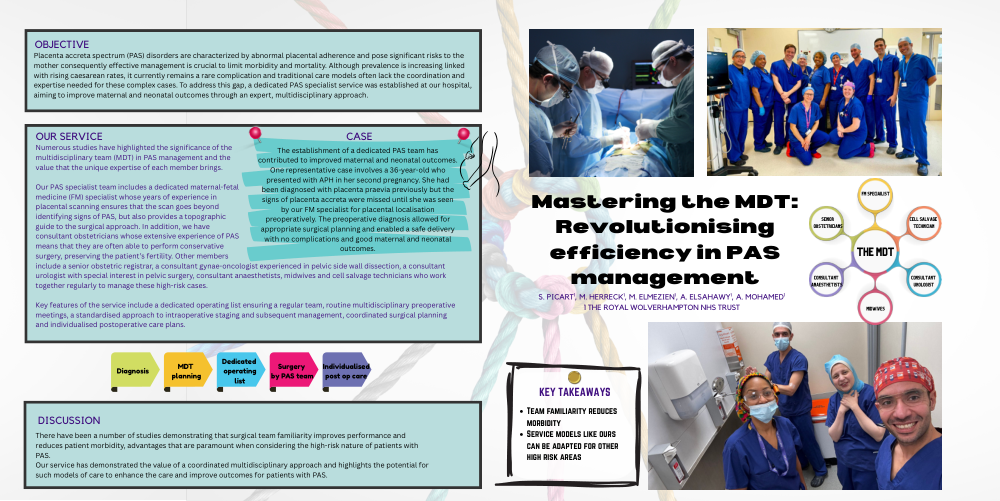
Mastering the MDT: Revolutionising efficiency in PAS management
Poster Presenter
Authors
Affiliations
Part of Topic
High risk pregnancy
Video
Title
Mastering the MDT: Revolutionising efficiency in PAS management
Objective
Placenta accreta spectrum (PAS) disorders are characterized by abnormal placental adherence and pose significant risks to the mother. Consequently, effective management is crucial to limit morbidity and mortality. Although prevalence is increasing linked with rising caesarean rates, it currently remains a rare complication and traditional care models often lack the coordination and expertise needed for these complex cases. To address this gap, a dedicated PAS specialist service was established at our hospital, aiming to improve maternal and neonatal outcomes through an expert, multidisciplinary approach.
Case
Numerous studies have highlighted the significance of the multidisciplinary team (MDT) in PAS management and the value that the unique expertise of each member brings.
Our PAS specialist team includes a dedicated maternal-fetal medicine (FM) specialist whose years of experience in placental scanning ensures that the scan goes beyond identifying signs of PAS, but also provides a topographic guide to the surgical approach. In addition, we have consultant obstetricians whose extensive experience of PAS means that they are often able to perform conservative surgery, preserving the patient’s fertility. Other members include a senior obstetric registrar, a consultant gynae-oncologist experienced in pelvic side wall dissection, a consultant urologist with special interest in pelvic surgery, consultant anaesthetists, midwives and cell salvage technicians who work together regularly to manage these high-risk cases.
Key features of the service include a dedicated operating list ensuring a regular team, routine multidisciplinary preoperative meetings, a standardised approach to intraoperative staging and subsequent management, coordinated surgical planning and individualised postoperative care plans.
The establishment of a dedicated PAS team has contributed to improved maternal and neonatal outcomes. One representative case involves a 36-year-old who presented with APH in her second pregnancy. She had been diagnosed with placenta praevia previously but the signs of placenta accreta were missed until she was seen by our FM specialist for placental localisation preoperatively. The preoperative diagnosis allowed for appropriate surgical planning and enabled a safe delivery with no complications and good maternal and neonatal outcomes.
Discussion
There have been a number of studies demonstrating that surgical team familiarity improves performance and reduces patient morbidity, advantages that are paramount when considering the high-risk nature of patients with PAS.
Conclusion
Our service has demonstrated the value of a coordinated multidisciplinary approach and highlights the potential for such models of care to enhance the care and improve outcomes for patients with PAS.