2,281 posters, 63 videos, 56 audios, 43 topics, 18 sessions, 6,174 authors, 2,323 institutions
ePostersLive by SciGen Technologies S.A. All rights reserved.
RCOG World Congress 2025
June 23 - 25, 2025 | ExCeL London, UK
EP.1118
Fetus versus fibroids : Unusual presentation of fibroids with a 16 weeks fetus
Poster Presenter
Part of Topic
High risk pregnancy
Fetus versus fibroids – How a 16 weeks fetus successfully reached term gestation in an unusual presentation of uterine fibroids
Priya Das Chowdhury, Tajmina Begum, Dawn Harpham, Daniel Lake, Sourav Das, Gabriel Awadzi
Objective
This case highlights the unusual presentation of fibroids with sepsis and the conundrum of its management at 16 weeks gestation.
Case report
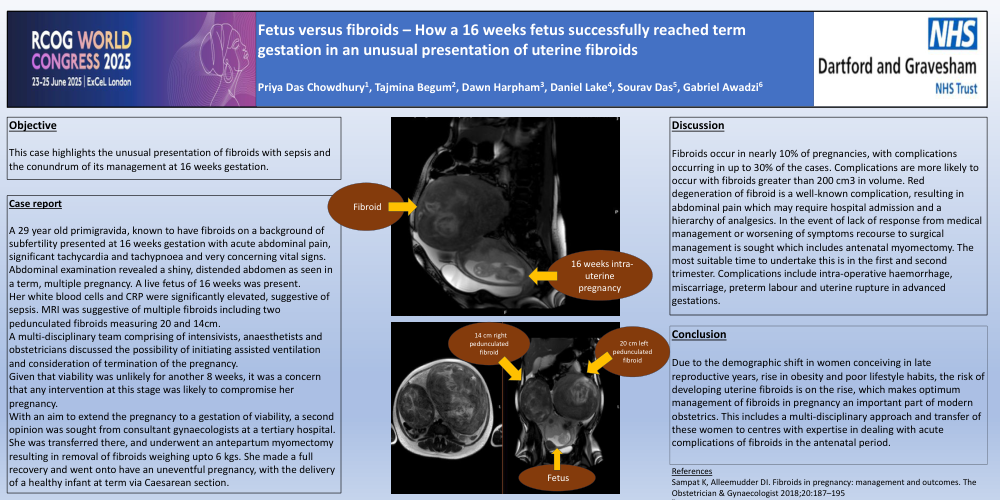
A 29 year old primigravida, known to have fibroids on a background of subfertility presented at 16 weeks gestation with acute abdominal pain, significant tachycardia and tachypnoea and very concerning vital signs. Abdominal examination revealed a shiny, distended abdomen as seen in a term, multiple pregnancy. A live fetus of 16 weeks was present. Her white blood cells and CRP were significantly elevated, suggestive of sepsis. MRI was suggestive of multiple fibroids including two pedunculated fibroids measuring 20 and 14cm. A multi-disciplinary team comprising of intensivists, anaesthetists and obstetricians discussed the possibility of initiating assisted ventilation and consideration of termination of the pregnancy. Given that viability was unlikely for another 8 weeks, it was a concern that any intervention at this stage was likely to compromise her pregnancy. With an aim to extend the pregnancy to a gestation of viability, a second opinion was sought from consultant gynaecologists at a tertiary hospital. She was transferred there. She underwent an antepartum myomectomy resulting in removal of fibroids weighing 6 kgs. She made a full recovery and had an uneventful pregnancy with the delivery of a healthy infant at term via Caesarean section.
Discussion
Fibroids occur in nearly 10% of pregnancies, with complications occurring in up to 30% of the cases. Complications are more likely to occur with fibroids greater than 200 cm3 in volume. Red degeneration of fibroid is a well-known complication, resulting in abdominal pain which may require hospital admission and a hierarchy of analgesics. In the event of lack of response from medical management or worsening of symptoms recourse to surgical management is sought which includes antenatal myomectomy. The most suitable time to undertake this is in the first and second trimester. Complications include intra-operative haemorrhage, miscarriage, preterm labour and uterine rupture in advanced gestations.
Conclusion
Due to the demographic shift in women conceiving in late reproductive years, rise in obesity and poor lifestyle habits, the risk of developing uterine fibroids is on the rise, which makes optimum management of fibroids in pregnancy an important part of modern obstetrics. This includes a multi-disciplinary approach and transfer of these women to centres with expertise in dealing with acute complications of fibroids in the antenatal period.