2,281 posters, 63 videos, 56 audios, 43 topics, 18 sessions, 6,174 authors, 2,323 institutions
ePostersLive by SciGen Technologies S.A. All rights reserved.
RCOG World Congress 2025
June 23 - 25, 2025 | ExCeL London, UK
EP.1102
Presentation of Cauda Equina Syndrome in the immediate post-natal period
Poster Presenter
Authors
Affiliations
Part of Topic
High risk pregnancy
Presentation of Cauda Equina Syndrome in the immediate post-natal period EP 1102
Ms Victoria Wright, Dr Rajni Chauhan, Dr Elizabeth Birch
Objective
This is an interesting case of Cauda Equina syndrome in a patient with a pre-existing spinal injury.
Early recognition and urgent surgical intervention were crucial in preventing long term disability.
This emphasises the heightened awareness of neurological complications postpartum especially in woman with prior spinal trauma
Case Report
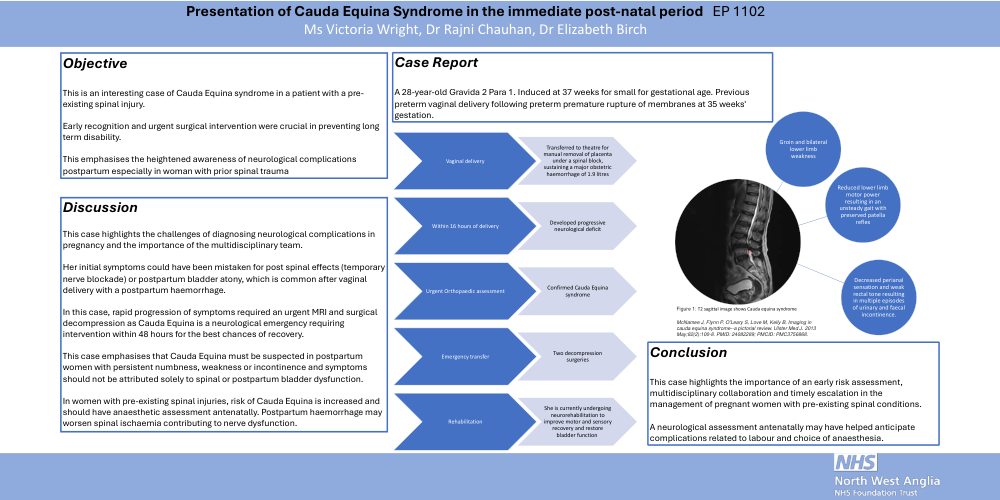
A 28-year-old Gravida 2 Para 1. Induced at 37 weeks for small for gestational age. Previous preterm vaginal delivery following preterm premature rupture of membranes at 35 weeks' gestation.
Discussion
This case highlights the challenges of diagnosing neurological complications in pregnancy and the importance of the multidisciplinary team.
Her initial symptoms could have been mistaken for post spinal effects (temporary nerve blockade) or postpartum bladder atony, which is common after vaginal delivery with a postpartum haemorrhage.
In this case, rapid progression of symptoms required an urgent MRI and surgical decompression as Cauda Equina is a neurological emergency requiring intervention within 48 hours for the best chances of recovery.
This case emphasises that Cauda Equina must be suspected in postpartum women with persistent numbness, weakness or incontinence and symptoms should not be attributed solely to spinal or postpartum bladder dysfunction.
In women with pre-existing spinal injuries, risk of Cauda Equina is increased and should have anaesthetic assessment antenatally. Postpartum haemorrhage may worsen spinal ischaemia contributing to nerve dysfunction.
Conclusion
This case highlights the importance of an early risk assessment, multidisciplinary collaboration and timely escalation in the management of pregnant women with pre-existing spinal conditions.
A neurological assessment antenatally may have helped anticipate complications related to labour and choice of anaesthesia.