2,281 posters, 63 videos, 56 audios, 43 topics, 18 sessions, 6,174 authors, 2,323 institutions
ePostersLive by SciGen Technologies S.A. All rights reserved.
RCOG World Congress 2025
June 23 - 25, 2025 | ExCeL London, UK
EP.1095
Rare case of Suprasellar Meningioma in a pregnant woman
Poster Presenter
Authors
Affiliations
Part of Topic
High risk pregnancy
Objective
Meningiomas during pregnancy are rare and often diagnosed late. The main challenge lies in deciding the timing of neurosurgery. We present a case of meningioma diagnosed at 26 weeks gestation, requiring neurosurgery at 29 weeks, followed by term delivery via caesarean section at 37 weeks.
Case Report
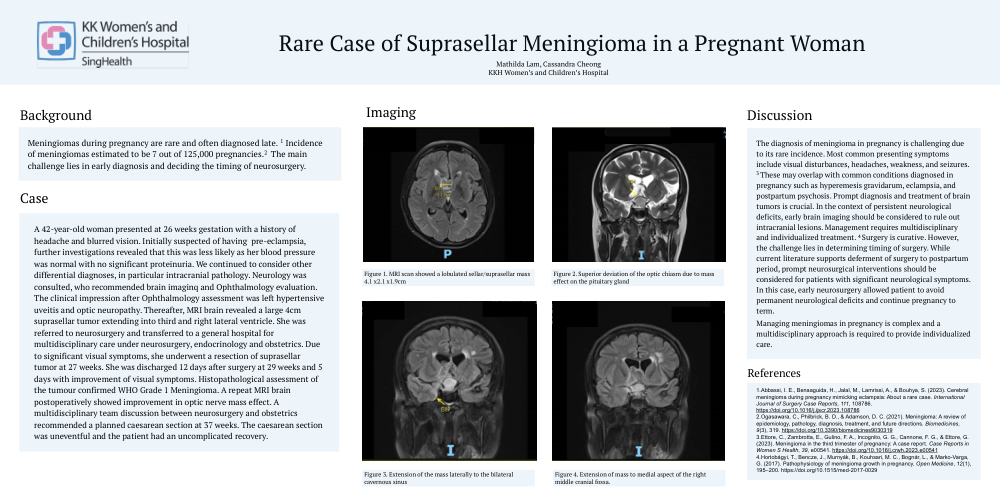
A 42-year-old woman presented at 26 weeks gestation with a history of headache and blurred vision. Initially suspected of having pre-eclampsia, further investigations revealed that this was less likely as her blood pressure was normal with no significant proteinuria. We continued to consider other differential diagnoses, in particular intracranial pathology. Neurology was consulted, who recommended brain imaging and Ophthalmology evaluation. The clinical impression after Ophthalmology assessment was left hypertensive uveitis and optic neuropathy. Thereafter, MRI brain revealed a large 4cm suprasellar tumor extending into third and right lateral ventricle. She was referred to neurosurgery and transferred to a general hospital for multidisciplinary care under neurosurgery, endocrinology and obstetrics. Due to significant visual symptoms, she underwent a resection of suprasellar tumor at 27 weeks. She was discharged 12 days after surgery at 29 weeks and 5 days with improvement of visual symptoms. Histopathological assessment of the tumour confirmed WHO Grade 1 Meningioma. A repeat MRI brain postoperatively showed improvement in optic nerve mass effect. A multidisciplinary team discussion between neurosurgery and obstetrics recommended a planned caesarean section at 37 weeks. The caesarean section was uneventful and the patient had an uncomplicated recovery.
Discussion
The diagnosis of meningioma in pregnancy is challenging due to its rare incidence. Most common presenting symptoms include visual disturbances, headaches, weakness, and seizures. These may overlap with common conditions diagnosed in pregnancy such as hyperemesis gravidarum, eclampsia, and postpartum psychosis. Prompt diagnosis and treatment of brain tumors is crucial. In the context of persistent neurological deficits, early brain imaging should be considered to rule out intracranial lesions. Management requires multidisciplinary and individualized treatment. Surgery is curative. However, the challenge lies in determining timing of surgery. While current literature supports deferment of surgery to postpartum period, prompt neurosurgical interventions should be considered for patients with significant neurological symptoms. In this case, early neurosurgery allowed patient to avoid permanent neurological deficits and continue pregnancy to term.
Conclusion
Managing meningiomas in pregnancy is complex and a multidisciplinary approach is required to provide individualized care.