2,281 posters, 63 videos, 56 audios, 43 topics, 18 sessions, 6,174 authors, 2,323 institutions
ePostersLive by SciGen Technologies S.A. All rights reserved.
RCOG World Congress 2025
June 23 - 25, 2025 | ExCeL London, UK
EP.1094
Pregnancy with synchronous metastatic tumors (breast and ovarian), rare entity.
Poster Presenter
Part of Topic
High risk pregnancy
Title
Pregnancy with synchronous metastatic tumors (breast and ovarian), rare entity.
Objective:
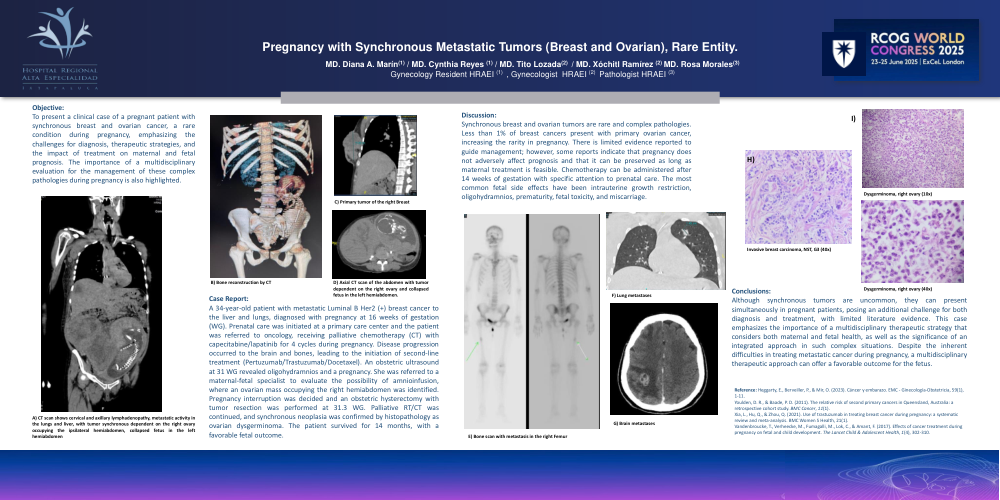
To present a clinical case of a pregnant patient with synchronous breast and ovarian cancer, a rare condition during pregnancy, emphasizing the challenges for diagnosis, therapeutic strategies, and the impact of treatment on maternal and fetal prognosis. The importance of a multidisciplinary evaluation for the management of these complex pathologies during pregnancy is also highlighted.
Case Report:
A 34-year-old patient with metastatic Luminal B Her2 (+) breast cancer to the liver and lungs, diagnosed with pregnancy at 16 weeks of gestation (WG). Prenatal care was initiated at a primary care center and the patient was referred to oncology, receiving palliative chemotherapy (CT) with capecitabine/lapatinib for 4 cycles during pregnancy. Disease progression occurred to the brain and bones, leading to the initiation of second-line treatment (Pertuzumab/Trastuzumab/Docetaxel). An obstetric ultrasound at 31 WG revealed oligohydramnios and a pregnancy. She was referred to a maternal-fetal specialist to evaluate the possibility of amnioinfusion, where an ovarian mass occupying the right hemiabdomen was identified. Pregnancy interruption was decided and an obstetric hysterectomy with tumor resection was performed at 31.3 WG. Palliative RT/CT was continued, and synchronous neoplasia was confirmed by histopathology as ovarian dysgerminoma. The patient survived for 14 months, with a favorable fetal outcome.
Discussion:
Synchronous breast and ovarian tumors are rare and complex pathologies. Less than 1% of breast cancers present with primary ovarian cancer, increasing the rarity in pregnancy. There is limited evidence reported to guide management; however, some reports indicate that pregnancy does not adversely affect prognosis and that it can be preserved as long as maternal treatment is feasible. Chemotherapy can be administered after 14 weeks of gestation with specific attention to prenatal care. The most common fetal side effects have been intrauterine growth restriction, oligohydramnios, prematurity, fetal toxicity, and miscarriage.
Conclusions:
Although synchronous tumors are uncommon, they can present simultaneously in pregnant patients, posing an additional challenge for both diagnosis and treatment, with limited literature evidence. This case emphasizes the importance of a multidisciplinary therapeutic strategy that considers both maternal and fetal health, as well as the significance of an integrated approach in such complex situations. Despite the inherent difficulties in treating metastatic cancer during pregnancy, a multidisciplinary therapeutic approach can offer a favorable outcome for the fetus.