2,281 posters, 63 videos, 56 audios, 43 topics, 18 sessions, 6,174 authors, 2,323 institutions
ePostersLive by SciGen Technologies S.A. All rights reserved.
RCOG World Congress 2025
June 23 - 25, 2025 | ExCeL London, UK
EP.1070
Management of atypical postnatal headache with red flag signs
Poster Presenter
Authors
Affiliations
Part of Topic
High risk pregnancy
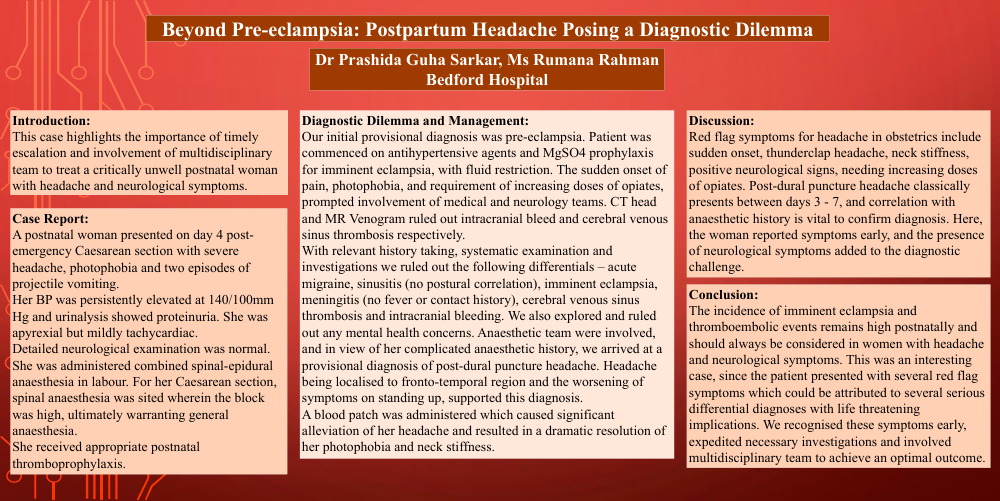
Title: Beyond Pre-eclampsia: Postpartum Headache Posing a Diagnostic Dilemma
Authors: Dr Prashida Guha Sarkar, Ms Rumana Rahman, Bedford Hospital
Introduction: This case highlights the importance of timely escalation and involvement of multidisciplinary team to treat a critically unwell postnatal woman with headache and neurological symptoms.
Case Report: A postnatal woman presented on day 4 post-emergency Caesarean section with severe headache, photophobia and two episodes of projectile vomiting. Her BP was persistently elevated at 140/100mm Hg and urinalysis showed proteinuria. She was apyrexial but mildly tachycardiac. Detailed neurological examination was normal. She was administered combined spinal-epidural anaesthesia in labour. For her Caesarean section, spinal anaesthesia was re-sited wherein the block was high, ultimately warranting general anaesthesia. She received appropriate postnatal thromboprophylaxis.
Diagnostic Dilemma and Management: Our initial provisional diagnosis was pre-eclampsia. Patient was commenced on antihypertensive agents and MgSO4 prophylaxis for imminent eclampsia, with fluid restriction. The sudden onset of pain, photophobia, and requirement of increasing doses of opiates, prompted involvement of medical and neurology teams. CT head and MR Venogram ruled out intracranial bleed and cerebral venous sinus thrombosis respectively. With relevant history taking, systematic examination and investigations we ruled out the following differentials – acute migraine, sinusitis (no postural correlation), imminent eclampsia, meningitis (no fever or contact history), cerebral venous sinus thrombosis and intracranial bleeding. We also explored and ruled out any mental health concerns. Anaesthetic team were involved, and in view of her complicated anaesthetic history, we arrived at a provisional diagnosis of post-dural puncture headache. Headache being localised to fronto-temporal region and the worsening of symptoms on standing up, supported this diagnosis. A blood patch was administered which caused significant alleviation of her headache and resulted in a dramatic resolution of her photophobia and neck stiffness.
Discussion: Red flag symptoms for headache in obstetrics include sudden onset, thunderclap headache, neck stiffness, positive neurological signs, needing increasing doses of opiates. Post-dural puncture headache classically presents between days 3 - 7, and correlation with anaesthetic history is vital to confirm diagnosis. Here, the woman reported symptoms early, and the presence of neurological symptoms added to the diagnostic challenge.
Conclusion: The incidence of imminent eclampsia and thromboembolic events remains high postnatally and should always be considered in women with headache and neurological symptoms. This was an interesting case, since the patient presented with several red flag symptoms which could be attributed to several serious differential diagnoses with life threatening implications. We recognised these symptoms early, expedited necessary investigations and involved multidisciplinary team to achieve an optimal outcome.