2,281 posters, 63 videos, 56 audios, 43 topics, 18 sessions, 6,174 authors, 2,323 institutions
ePostersLive by SciGen Technologies S.A. All rights reserved.
RCOG World Congress 2025
June 23 - 25, 2025 | ExCeL London, UK
EP.1061
Intraoperative encounter of a live birth term Abdominal pregnancy: rare case report
Poster Presenter
Authors
Affiliations
Part of Topic
High risk pregnancy
Video
Title: Intraoperative encounter of a live birth term Abdominal pregnancy: rare case report
Objective: Abdominal ectopic pregnancy is an uncommon where the embryo implants and develops within the peritoneal cavity, outside the uterine cavity exclusively fallopian tubes, ovary. This rare case report of healthy alive fetus after abdominal ectopic pregnancy secondary to rupture cornual ectopic pregnancy aims to contribute to the limited body of literature on abdominal ectopic pregnancies by detailing a unique case, discussing the diagnostic challenges, and exploring effective management strategies. By highlighting this rare condition, we hope to enhance clinical awareness and improve patient outcomes through early intervention and comprehensive care.
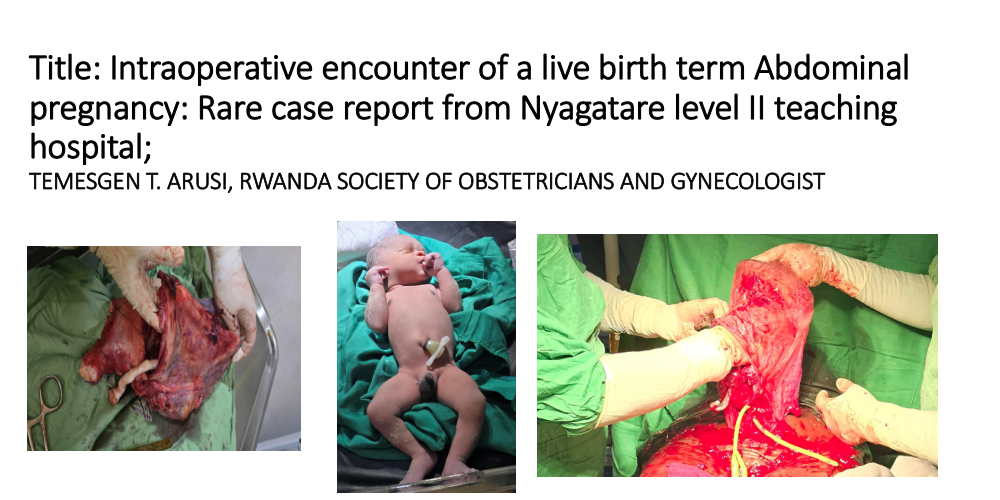
Case report: 28 years old G3P2 lady admitted for elective cesarean section for the diagnosis of Term pregnancy with placenta previa total. The skin was opened through a Pfannenstiel incision, and the intraoperative findings were as follows: A very thin, bulged hypertrophied membrane was noted, arising out towards abdominal cavity from the left half of the fundus of the uterus, the cornual region and left upper one third of uterus. The body of the uterus was found to be stacked in the pelvis and tilted to the right side. The right half of fundus and whole uterus, ovaries and tubes were healthy and visible. The placenta was implanted on the left side of the fundus, extending to the adnexal structures, membrane and partly to the left posterior fundus. An incision was made upon the thin hypertrophied membrane, and a 3kg male fetus was delivered by breech, with APGAR scores of 9 and 10 at the first and fifth minutes, respectively. Subsequently, a hysterectomy and left salpingooophorectomy was performed for the uterus damaged significantly.
Discussion: Abdominal pregnancy diagnosis is challenging and requires advanced imaging techniques such as ultrasound, CT scan, and MRI. MRI is preferred in developed countries, especially for late gestation. In low-resource settings, a high index of suspicion and clinical judgment are crucial. Ultrasound is helpful in the first and second trimesters but less effective in advanced stages. Most diagnoses in low-resource settings are made intraoperatively. A review of 17 cases showed only 29.41% were correctly diagnosed before surgery. In our case, despite multiple ultrasounds, the diagnosis was missed until an elective cesarean section for placenta previa was performed.
Conclusion: Abdominal pregnancy is rare and serious, with significant fetomaternal complications requiring high diagnostic suspicion, especially in low-resource settings. This case highlights a successful outcome following probable cornual ectopic pregnancy rupture, underscoring the need for clinician vigilance and caution.