2,281 posters, 63 videos, 56 audios, 43 topics, 18 sessions, 6,174 authors, 2,323 institutions
ePostersLive by SciGen Technologies S.A. All rights reserved.
RCOG World Congress 2025
June 23 - 25, 2025 | ExCeL London, UK
EP.1046
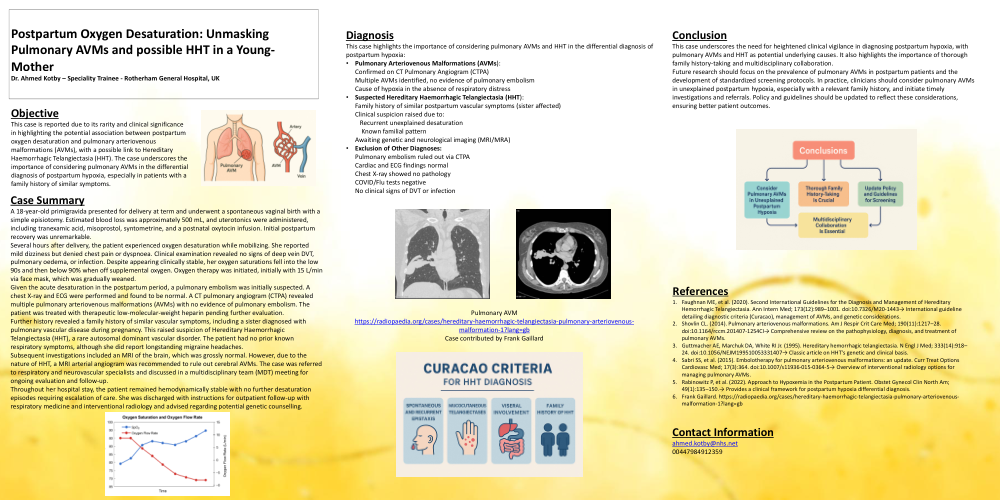
Postpartum Oxygen Desaturation: Unmasking Pulmonary AVMs and possible HHT in a Young-Mother
Poster Presenter
Authors
Affiliations
Part of Topic
High risk pregnancy
Postpartum Oxygen Desaturation: Unmasking Pulmonary AVMs and possible HHT in a Young-Mother
Dr. Ahmed Kotby – Speciality Trainee - Rotherham General Hospital, UK
Objective
This case is reported due to its rarity and clinical significance in highlighting the potential association between postpartum oxygen desaturation and pulmonary arteriovenous malformations (AVMs), with a possible link to Hereditary Haemorrhagic Telangiectasia (HHT). The case underscores the importance of considering pulmonary AVMs in the differential diagnosis of postpartum hypoxia, especially in patients with a family history of similar symptoms.
Case Summary
A 18-year-old primigravida presented for delivery at term and underwent a spontaneous vaginal birth with a simple episiotomy. Estimated blood loss was approximately 500 mL, and uterotonics were administered, including tranexamic acid, misoprostol, syntometrine, and a postnatal oxytocin infusion. Initial postpartum recovery was unremarkable.
Several hours after delivery, the patient experienced oxygen desaturation while mobilizing. She reported mild dizziness but denied chest pain or dyspnoea. Clinical examination revealed no signs of deep vein DVT, pulmonary oedema, or infection. Despite appearing clinically stable, her oxygen saturations fell into the low 90s and then below 90% when off supplemental oxygen. Oxygen therapy was initiated, initially with 15 L/min via face mask, which was gradually weaned.
Given the acute desaturation in the postpartum period, a pulmonary embolism was initially suspected. A chest X-ray and ECG were performed and found to be normal. A CT pulmonary angiogram (CTPA) revealed multiple pulmonary arteriovenous malformations (AVMs) with no evidence of pulmonary embolism. The patient was treated with therapeutic low-molecular-weight heparin pending further evaluation.
Further history revealed a family history of similar vascular symptoms, including a sister diagnosed with pulmonary vascular disease during pregnancy. This raised suspicion of Hereditary Haemorrhagic Telangiectasia (HHT), a rare autosomal dominant vascular disorder. The patient had no prior known respiratory symptoms, although she did report longstanding migraine headaches.
Subsequent investigations included an MRI of the brain, which was grossly normal. However, due to the nature of HHT, a MRI arterial angiogram was recommended to rule out cerebral AVMs. The case was referred to respiratory and neurovascular specialists and discussed in a multidisciplinary team (MDT) meeting for ongoing evaluation and follow-up.
Throughout her hospital stay, the patient remained hemodynamically stable with no further desaturation episodes requiring escalation of care. She was discharged with instructions for outpatient follow-up with respiratory medicine and interventional radiology and advised regarding potential genetic counselling.
Diagnosis
This case highlights the importance of considering pulmonary AVMs and HHT in the differential diagnosis of postpartum hypoxia:
Confirmed on CT Pulmonary Angiogram (CTPA)
Multiple AVMs identified, no evidence of pulmonary embolism
Cause of hypoxia in the absence of respiratory distress
Family history of similar postpartum vascular symptoms (sister affected)
Clinical suspicion raised due to:
Recurrent unexplained desaturation
Known familial pattern
Awaiting genetic and neurological imaging (MRI/MRA)
Pulmonary embolism ruled out via CTPA
Cardiac and ECG findings normal
Chest X-ray showed no pathology
COVID/Flu tests negative
No clinical signs of DVT or infection
https://radiopaedia.org/cases/hereditary-haemorrhagic-telangiectasia-pulmonary-arteriovenous-malformation-1?lang=gb
Case contributed by Frank Gaillard
Conclusion
This case underscores the need for heightened clinical vigilance in diagnosing postpartum hypoxia, with pulmonary AVMs and HHT as potential underlying causes. It also highlights the importance of thorough family history-taking and multidisciplinary collaboration.
Future research should focus on the prevalence of pulmonary AVMs in postpartum patients and the development of standardized screening protocols. In practice, clinicians should consider pulmonary AVMs in unexplained postpartum hypoxia, especially with a relevant family history, and initiate timely investigations and referrals. Policy and guidelines should be updated to reflect these considerations, ensuring better patient outcomes.
References