1,830 posters, 67 videos, 75 audios, 29 topics, 22 sessions, 4,727 authors, 1,697 institutions
ePostersLive by SciGen Technologies S.A. All rights reserved.
RCOG World Congress 2023
June 12 - 14, 2023 | London, UK

EP.0765
Acute fatty liver of pregnancy : An Obstetric emergency.
Poster Presenter
Authors
Affiliations
Part of Topic
Labour Ward Management
Sarosh Khan, Miriam Ali – East Surrey hospital
Introduction
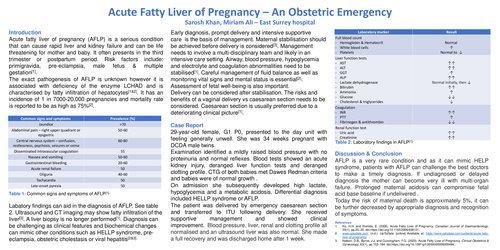
Acute fatty liver of pregnancy (AFLP) is a serious condition that can cause rapid liver and kidney failure and can be life threatening for mother and baby. It often presents in the third trimester or postpartum period. Risk factors include: primigravida, pre-eclampsia, male fetus & multiple gestation[1]. The exact pathogenesis of AFLP is unknown however it is associated with deficiency of the enzyme LCHAD and is characterised by fatty infiltration of hepatocytes[1&2]. It has an incidence of 1 in 7000-20,000 pregnancies and mortality rate is reported to be as high as 75%[2].Labatory findings can aid in the diagnosis of AFLP. See table 2. Ultrasound and CT imaging may show fatty infiltration of the liver[3]. A liver biopsy is no longer performed[1]. Diagnosis can be challenging as clinical features and biochemical changes can mimic other conditions such as HELLP syndrome, pre-eclampsia, obstetric cholestasis or viral hepatitis[2&3]. Early diagnosis, prompt delivery and intensive supportive care is the basis of management. Maternal stabilisation should be achieved before delivery is considered[3]. Management needs to involve a multi-disciplinary team and likely in an intensive care setting. Airway, blood pressure, hypoglycemia and electrolyte and coagulation abnormalities need to be stabilised[1]. Careful management of fluid balance as well as monitoring vital signs and mental status is essential[2]. Assessment of fetal well-being is also important. Delivery can be considered after stabilisation. The risks and benefits of a vaginal delivery vs caesarean section needs to be considered. Caesarean section is usually preferred due to a deteriorating clinical picture[1].
Case Report
29-year-old female, G1 P0, presented to the day unit with feeling generally unwell. She was 34 weeks pregnant with DCDA male twins.Examination identified a mildly raised blood pressure with no proteinuria and normal reflexes. Blood tests showed an acute kidney injury, deranged liver function tests and deranged clotting profile. CTG of both babies met Dawes Redman criteria and babies were of normal growth . On admission she subsequently developed high lactate, hypoglycemia and a metabolic acidosis. Differential diagnosis included HELLP syndrome or AFLP.The patient was delivered by emergency caesarean section and transferred to ITU following delivery. She received supportive management and showed clinical improvement. Blood pressure, liver, renal and clotting profile all normalised and an ultrasound liver was also normal. She made a full recovery and was discharged home after 1 week.
Discussion & Conclusion
AFLP is a very rare condition and as it can mimic HELP syndrome, patients with AFLP can challenge the best doctors to make a timely diagnosis. If undiagnosed or delayed diagnosis the mother can become very ill with multi-organ failure. Prolonged maternal acidosis can compromise fetal acid base baseline if undelivered .Today the risk of maternal death is approximately 5%, it can be further decreased by appropriate diagnosis and recognition of symptoms.
References