1,830 posters, 67 videos, 75 audios, 29 topics, 22 sessions, 4,727 authors, 1,697 institutions
ePostersLive by SciGen Technologies S.A. All rights reserved.
RCOG World Congress 2023
June 12 - 14, 2023 | London, UK

EP.0699
Endometrial Osseous Metaplasia– Rare cause of Postmenopausal PV Bleeding
Poster Presenter
Authors
Affiliations
Part of Topic
Benign Gynaecology
Endometrial Osseous Metaplasia– Rare cause of Postmenopausal PV Bleeding
- Objectives
Endometrial osseous metaplasia (EOM) is a rare benign pathological condition that appears to be associated with multiple unspecific gynecologic symptoms such as infertility, Abnormal uterine bleeding, pelvic pain, and recurrent pregnancy loss or, more rarely, is asymptomatic.
- Case report
A 54-year-old woman presented with multiple episodes of postmenopausal bleeding. She had no children and had two previous terminations of pregnancy. She attained menopause at 52 years. Her body mass index was 45 Kg/m2.
Pelvic ultrasound revealed a thickened echogenic endometrium with some vascular uptake. Uterine myometrium, cervix and rest of pelvic structures were unremarkable.
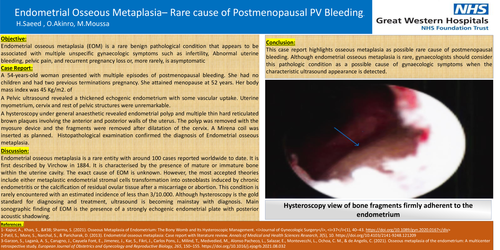
A hysteroscopy under general anaesthetic revealed an endometrial polyp and multiple thin hard reticulated brown plaques involving the anterior and posterior walls of the uterus. The polyp was removed with the myosure device and the fragments were removed after dilatation of the cervix. A Mirena coil was inserted as planned. Histopathological examination confirmed the diagnosis of Endometrial osseous metaplasia.
- Discussion
Endometrial osseous metaplasia is a rare entity with around 100 cases reported worldwide to date. It is first described by Virchow in 1884. It is characterised by the presence of mature or immature bone within the uterine cavity. The exact cause of EOM is unknown. However, the most accepted theories include either metaplastic endometrial stromal cells transformation into osteoblasts induced by chronic endometritis or the calcification of residual ovular tissue after a miscarriage or abortion. This condition is rarely encountered with an estimated incidence of less than 3/10.000. Although hysteroscopy is the gold standard for diagnosing and treating, ultrasound is becoming a mainstay with diagnosis. The main sonographic finding of EOM is the presence of a strongly echogenic endometrial plate with posterior acoustic shadowing.
- Conclusion
This case report highlights osseous metaplasia as a possible rare cause of postmenopausal bleeding. Although endometrial osseous metaplasia is rare, gynaecologists should consider this pathologic condition as a possible cause of gynecologic symptoms when the characteristic ultrasound appearance is detected.