1,830 posters, 67 videos, 75 audios, 29 topics, 22 sessions, 4,727 authors, 1,697 institutions
ePostersLive by SciGen Technologies S.A. All rights reserved.
RCOG World Congress 2023
June 12 - 14, 2023 | London, UK

EP.0628
Delivery outcomes from a new maternal cardiac clinic in Western Australia.
Poster Presenter
Authors
Riti Chetty, Patricia Wong, Han-Shin Lee, Gageswari Sunanda, Faith Njue
Affiliations
Part of Topic
High Risk Pregnancy
Delivery outcomes from a new maternal cardiac clinic in Western Australia.
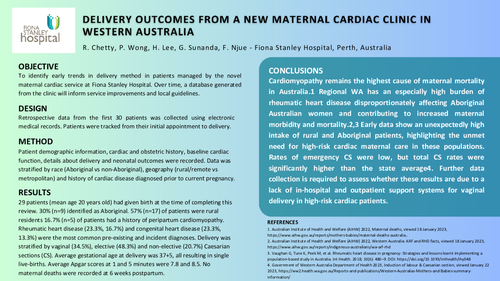
Objective: To identify early trends in delivery method in patients managed by the novel maternal cardiac service at Fiona Stanley Hospital. Over time, a database generated from the clinic will inform service improvements and local guidelines.
Design: Retrospective data from the first 30 patients was collected using electronic medical records. Patients were tracked from their initial appointment to delivery.
Method: Patient demographic information, cardiac and obstetric history, baseline cardiac function, details about delivery and neonatal outcomes were recorded. Data was stratified by race (Aboriginal vs non-Aboriginal), geography (rural/remote vs metropolitan) and history of cardiac disease diagnosed prior to current pregnancy.
Results: 29 patients (mean age 20 years old) had given birth at the time of completing this review. 30% (n=9) identified as Aboriginal. 57% (n=17) of patients were rural residents 16.7% (n=5) of patients had a history of peripartum cardiomyopathy. Rheumatic heart disease (23.3%, 16.7%) and congenital heart disease (23.3%, 13.3%) were the most common pre-existing and incident diagnoses. Delivery was stratified by vaginal (34.5%), elective (48.3%) and non-elective (20.7%) Caesarian sections (CS). Average gestational age at delivery was 37+5, all resulting in single live-births. Average Apgar scores at 1 and 5 minutes were 7.8 and 8.5. No maternal deaths were recorded at 6 weeks postpartum.
Conclusions: Cardiomyopathy remains the highest cause of maternal mortality in Australia.1 Regional WA has an especially high burden of rheumatic heart disease disproportionately affecting Aboriginal Australian women and contributing to increased maternal morbidity and mortality.2,3 Early data show an unexpectedly high intake of rural and Aboriginal patients, highlighting the unmet need for high-risk cardiac maternal care in these populations. Rates of emergency CS were low, but total CS rates were significantly higher than the state average4. Further data collection is required to assess whether these results are due to a lack of in-hospital and outpatient support systems for vaginal delivery in high-risk cardiac patients.