1,830 posters, 67 videos, 75 audios, 29 topics, 22 sessions, 4,727 authors, 1,697 institutions
ePostersLive by SciGen Technologies S.A. All rights reserved.
RCOG World Congress 2023
June 12 - 14, 2023 | London, UK

EP.0010
A closer look at Intra-Uterine Fetal Death in secondary hospital in Qatar
Poster Presenter
Part of Topic
High Risk Pregnancy
ABSTRACT
Background:
Stillbirth refers to the death of a fetus before birth or during childbirth after 20 weeks of pregnancy. It is one of life's most stressful events. Approximately half of late fetal deaths occur in apparently uncomplicated pregnancies. Early assessment and timely intervention are the two main approaches to reducing stillbirths globally. Our aim in this study was to evaluate the incidence of IUFD and the causes and complications associated with childbirth, as well as to validate our practice in following up these patients in terms of investigations and appointments.
Methods:
This is a retrospective study done over a period extending from Jan 2019 to Oct 2022. IUFD was taken as absent fetal heart sounds beyond 20 weeks gestation which was confirmed by ultrasound. Maternal and fetal records were analyzed for studying demographic profile, obstetric details including present and past complications, along with investigations and follow ups after discharge from hospital.
Results:
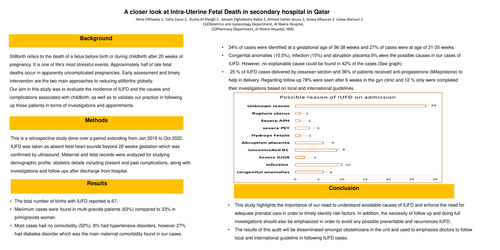
The total number of births with IUFD reported is 67.
Maximum cases were found in multi-gravida patients (63%) compared to 33% in primigravida women.
Most cases had no comorbidity (52%), 8% had hypertensive disorders, however 27% had diabetes disorder which was the main maternal comorbidity found in our cases.
34% of cases were identified at a gestational age of 36-38 weeks and 27% of cases were at age of 31-35 weeks.
Congenital anomalies (10.5%), infection (15%) and abruption placenta 9% were the possible causes in our cases of IUFD. However, no explainable cause could be found in 42% of the cases.
25 % of IUFD cases delivered by cesarean section and 36% of patients received anti-progesterone (Mifepristone) to help in delivery. Regarding follow up 78% were seen after 6 weeks in the gyn clinic and 12 % only were completed their investigations based on local and international guidelines.
Conclusions:
This study highlights the importance of our need to understand avoidable causes of IUFD and enforce the need for adequate prenatal care in order to timely identify risk factors. In addition, the necessity of follow up and doing full investigations should also be emphasized in order to avoid any possible preventable and recurrences IUFD.
The results of this audit will be disseminated amongst obstetricians in the unit and used to emphasize doctors to follow local and international guideline in following IUFD cases.