1,830 posters, 67 videos, 75 audios, 29 topics, 22 sessions, 4,727 authors, 1,697 institutions
ePostersLive by SciGen Technologies S.A. All rights reserved.
RCOG World Congress 2023
June 12 - 14, 2023 | London, UK

EP.0463
Gynecological Surgical Waitlist Evaluation Post Natural Disaster and COVID 19
Poster Presenter
Authors
Affiliations
Part of Topic
Pandemic and impact of Covid/Infectious Diseases
Gynecological Surgical Waitlist Evaluation Post Natural Disaster and COVID 19
Giovana Charite, Caryn Albury, Shamanique Bodie-Williams
Rand Memorial Hospital, Grand Bahama, Bahamas
Objective
To determine the number of patients currently awaiting gynecological procedures and triage their urgency for surgery.
Design
A retrospective study design was used to perform an internal audit of patients at the Rand Memorial Hospital from September 2019 to July 2022.
Method
Files were accessed from the medical records department of the Rand Memorial Hospital of females above 18 years of age admitted under the diagnosis of anemia, abnormal vaginal bleeding, or abnormal uterine bleeding. Those with a known malignancy were excluded. Demographics were recorded and entered into a database. This list was then collated to a known list of patients awaiting surgery recorded by the team. They were then triaged into levels based on the number of admissions and current medical management.
Discussion
The healthcare delivery system in Grand Bahama has been severely impeded since Hurricane Dorian made landfall on September 1, 2019 as a category 5 hurricane. After such a loss of supplies, equipment, infrastructure and personnel elective surgeries were not considered priority. A second blow was delivered in March 2020 upon the arrival of coronavirus pandemic whose restrictions further affected the accessibility of healthcare. Following recommendations from various international bodies, the Public Hospital Authority decided to suspend all elective surgeries. This has affected patient care leading to prolonged pain and suffering and in some cases unnecessary complications from disease progression and delayed intervention.
There are various ways to manage AUB medically or surgically. Women would often begin with medical treatment and then escalate care to various surgical options. A study showed this occurring in 58% of women. This study also showed that surgical intervention had a greater improvement in reduction of bleeding and improving quality of life than medical therapy in the short term but the evidence for long term benefits was weak and inconsistent. Overall, the decision between medical or surgical management should not be decided without considering side effects of medications, the risks and complications of surgery, and how effective each method is at controlling uterine bleeding.
Results
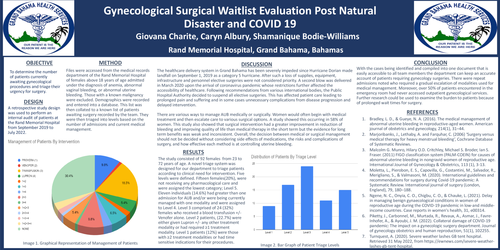
The study consisted of 92 females from 23 to 72 years of age. A novel triage system was designed for our department to triage patients according to clinical need for intervention. Five levels were defined. Fifteen females(20%), were not receiving any pharmacological care and were assigned the lowest category; Level 5. Eleven individuals (14.6%) had greater than one admission for AUB and/or were being currently managed with one modality and were assigned to Level 4. Level 3 comprised of 24 (32%) females who received a blood transfusion +/- Venofer alone. Level 2 patients, (22.7%) were either given Lupron +/- any other treatment modality or had required ≥1 treatment modality. Level 1 patients (12%) were those with ≥2 treatment modalities or had time sensitive indications for their procedures.
Conculsion
With the cases being identified and compiled into one document that is easily accessible to all team members the department can keep an accurate account of patients requiring gynecology surgeries. There were repeat admissions noted who required a gradual escalation of modalities used for medical management. Moreover, over 50% of patients encountered in the emergency room had never accessed outpatient gynecological services. Further research could be used to examine the burden to patients because of prolonged wait times for surgery.