1,830 posters, 67 videos, 75 audios, 29 topics, 22 sessions, 4,727 authors, 1,697 institutions
ePostersLive by SciGen Technologies S.A. All rights reserved.
RCOG World Congress 2023
June 12 - 14, 2023 | London, UK

EP.0393
INTRAPARTUM PUBIC SYMPHYSIS DIASTASIS: A RARE OBSTETRICAL COMPLICATION
Poster Presenter
Authors
Vasiliki-Kalouda Tsapadikou, Konstantinos Zacharis, Spyridon Chondros, Asimina-Paraskevi Barbarousi, Ismini Anagnostaki, Maria-Emmanouela Anagnostaki, Stavros Kravvaritis, Theodoros Charitos, Anastasia Fouka
Affiliations
Department of Obstetrics and Gynaecology, General Hospital of Lamia, Trainee in Internal Medicine, Psychiatric Hospital of Attica, Chaidari
Part of Topic
Labour Ward Management
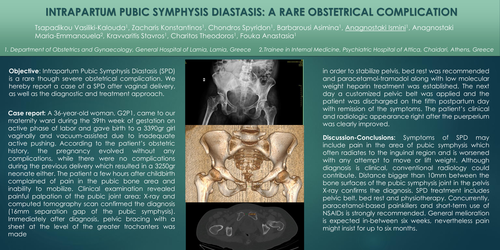
Objective: Intrapartum Pubic Symphysis Diastasis (SPD) is a rare though severe obstetrical complication. We hereby report a case of a SPD after vaginal delivery, as well as the diagnostic and treatment approach. Case report: A 36-year-old woman, G2P1, came to our maternity ward during the 39th week of gestation on active phase of delivery and gave birth to a 3390gr girl vaginally and vacuum-assisted due to inadequate active pushing. According to the patient’s obstetric history, the pregnancy evolved without any complications, while there were no complications during the previous delivery which resulted in a 3250gr neonate either. The patient a few hours after childbirth complained of pain in the pubic bone area and inability to mobilize. Clinical examination revealed painful palpation of the pubic joint area; X-ray and computed tomography scan confirmed the diagnosis (16mm separation gap of the pubic symphysis). Immediately after diagnosis, pelvic bracing with a sheet at the level of the greater trochanters was made in order to stabilize pelvis, bed rest was recommended and paracetamol-tramadol along with low molecular weight heparin treatment was established. The next day a customized pelvic belt was applied and the patient was discharged on the 5th postpartum day with remission of the symptoms. The patient’s clinical and radiologic appearance right after the puerperium was clearly improved. Discussion-Conclusions: Symptoms of SPD may include pain in the area of pubic symphysis which often radiates to the inguinal region and is worsened with any attempt to move or lift weight. Although diagnosis is clinical, conventional radiology could contribute. Distance bigger than 10mm between the bone surfaces of the pubic symphysis joint in the pelvis X-ray confirms the diagnosis. SPD treatment includes pelvic belt, bed rest and physiotherapy. Concurrently, paracetamol-based painkillers and short-term use of NSAIDs is strongly recommended. General melioration is expected in-between six weeks, nevertheless pain might insist for up to six months.