1,830 posters, 67 videos, 75 audios, 29 topics, 22 sessions, 4,727 authors, 1,697 institutions
ePostersLive by SciGen Technologies S.A. All rights reserved.
RCOG World Congress 2023
June 12 - 14, 2023 | London, UK

EP.0386
Bruck syndrome: A rare form of skeletal dysplasia
Poster Presenter
Authors
Affiliations
Part of Topic
High Risk Pregnancy
Objective
Bruck syndrome is a type of skeletal dysplasia which causes significant bone fragility (with common fractures), short long bones and joint contractures. The syndrome is an autosomal recessive form of osteogenesis imperfecta (OI), associated with collagen folding and cross-linking defects in the FKBP10 and/or PLOD2 genes. Consequently, the clinical features and management overlaps with that of Osteogenesis Imperfecta (OI). The prognosis is generally unfavourable with some cases being lethal due to respiratory failure (small rib cage, broken ribs etc).
Case Presentation:
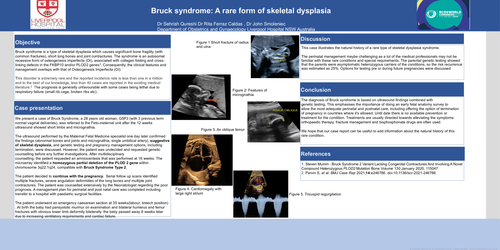
We present a case of Bruck Syndrome, a 28 years old woman, G5P3 (with 3 previous term normal vaginal deliveries), was referred to the Feto-maternal unit after the 12 weeks ultrasound showed short limbs and micrognathia. The ultrasound performed by the Maternal Fetal Medicine specialist one day later confirmed the findings (abnormal bones and joints and micrognathia, single umbilical artery), suggestive of skeletal dysplasia, and genetic testing and pregnancy management options, including termination, were discussed. However, the patient was undecided and requested genetic counselling before any further investigations. After multidisciplinary counselling, the patient requested an amniocentesis that was performed at 16 weeks. The microarray identified a homozygous partial deletion of the PLOD2 gene within chromosome 3q22.1q24, compatible with Bruck syndrome Type 2. The patient decided to continue with the pregnancy. Serial follow up scans identified multiple fractures, severe angulation deformities of the long bones and multiple joint contractures. The patient was counselled extensively by the Neonatologist regarding the poor prognosis. A management plan for perinatal and postnatal care was completed, including transfer to a hospital with paediatric surgery facilities.
The patient underwent an emergency caesarean section (labour, breech position) and the baby passed away 8 weeks later due to increasing ventilatory requirements and cardiac failure.
Discussion
This case illustrates the natural history of a rare type of skeletal dysplasia syndrome.
The perinatal management maybe challenging as a lot of the medical professionals may not be familiar with these rare conditions and special requirements.
The parental genetic testing showed that the parents were asymptomatic heterozygous carriers of the condition, so, the risk of recurrence was estimated as 25%.
Conclusion:
The diagnosis of Bruck syndrome is based on ultrasound findings combined with genetic testing. This emphasises the importance of doing an early fetal anatomy survey to allow the most adequate perinatal and postnatal care, including offering the option of termination of pregnancy in countries where it’s allowed. Until date there is no available prevention or treatment for the condition. Treatments are usually directed towards alleviating the symptoms: orthopaedic therapy, fracture management and bisphosphonate drugs are often used.
We hope that our case report can be useful to add information about the natural history of this rare condition.