1,830 posters, 67 videos, 75 audios, 29 topics, 22 sessions, 4,727 authors, 1,697 institutions
ePostersLive by SciGen Technologies S.A. All rights reserved.
RCOG World Congress 2023
June 12 - 14, 2023 | London, UK

EP.0336
A case report: post cesarean section necrotizing fasciitis
Poster Presenter
Authors
Affiliations
Part of Topic
Hot Topics (Emerging research/issues) in Obstetrics
Objective:
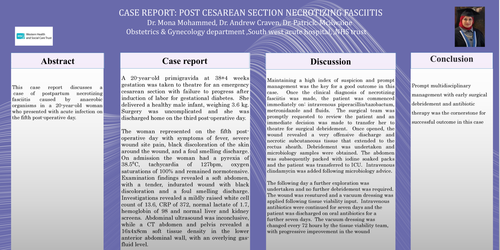
We report a case of postpartum necrotizing fasciitis caused by anaerobic organisms in a 20-year-old woman who presented with acute infection on the fifth post-operative day.
Case Report:
A 20-year-old primigravida at 38+4 weeks gestation was taken to theatre for an emergency cesarean section withfailure to progress after induction of labour for gestational diabetes. She delivered a healthy male infant, weighing 3.6 kg. Surgery was uncomplicated and she was discharged home on the third post-operative day.
The woman represented on the fifth post-operative day with symptoms of fever, severe wound site pain, black discoloration of the skin around the wound, and a foul smelling discharge. On admission the woman had a pyrexia of 38.5⁰C, tachycardia of 127bpm, oxygen saturations of 100% and remained normotensive. Examination findings revealed a soft abdomen, with a tender, indurated wound with black discoloration and a foul smelling discharge. Investigations revealed a mildly raised white cell count of 13.6, CRP of 372, normal lactate of 1.7, hemoglobin of 98 and normal liver and kidney screens. Abdominal ultrasound was inconclusive, while a CT abdomen and pelvis revealed a 16x4x8cm soft tissue density in the lower anterior abdominal wall, with an overlying gas-fluid level.
Discussion:
Maintaining a high index of suspicion and prompt management was the key for a good outcome in this case. Once the clinical diagnosis of necrotizing fasciitis was made, the patient was commenced immediately on: intravenous piperacillin/tazobactum, metronidazole and fluids. The surgical team was promptly requested to review the patient and an immediate decision was made to transfer her to theatre for surgical debridement. Once opened, the wound revealed a very offensive discharge and necrotic subcutaneous tissue that extended to the rectus sheath.
Debridement was undertaken and microbiology samples were obtained. The abdomen was subsequently packed with iodine soaked packs and the patient was transferred to ICU. Intravenous clindamycin was added following microbiology advice.
The following day a further exploration was undertaken and no further debridement was required. The wound was resutured and a vacuum dressing was applied following tissue viability input. Intravenous antibiotics were continued for seven days and the patient was discharged on oral antibiotics for a further seven days. The vacuum dressing was changed every 72 hours by the tissue viability team, with progressive improvement in the wound documented.
Conclusion:
Prompt multidisciplinary management with early surgical debridement and antibiotic therapy was the cornerstone for successful outcome in this case.